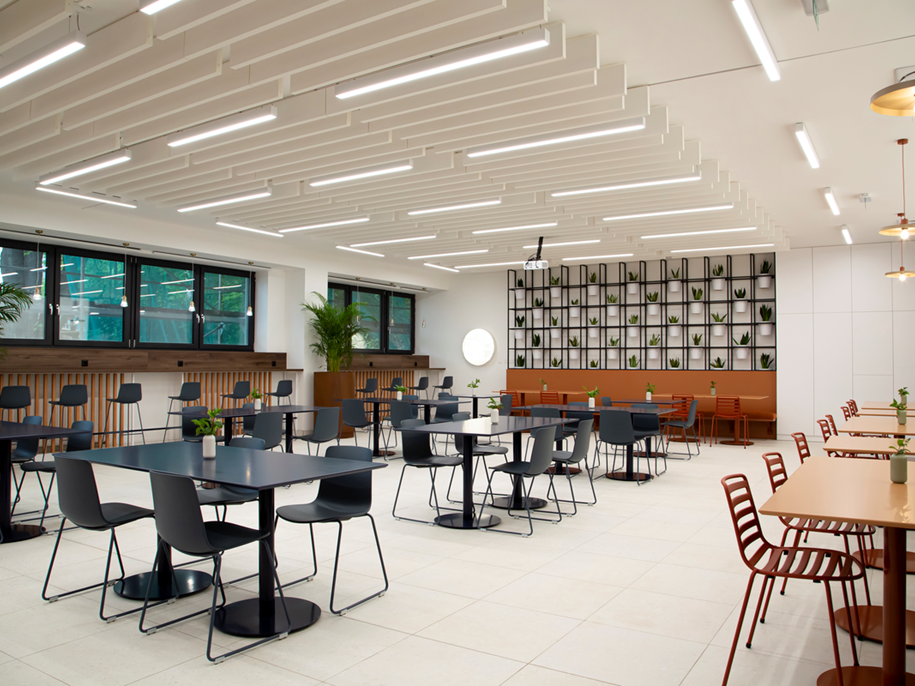
AGEL Levoča Hospital – Staff restaurant
Project: AGEL Levoča Hospital – Staff restaurant
Segment: Healthcare
Country/city: Slovakia, Levoča
Architect: Ing. arch. Mgr. art. Stanislava Slaninová Hollóvá
When a hospital restaurant becomes a place of rest
The renovation of the staff restaurant at AGEL Levoča Hospital aimed to create a space that softens the clinical feel of the hospital and offers healthcare professionals a genuine opportunity to relax.
This transformation is part of the hospital’s wider vision – to promote wellbeing, community and sustainability through thoughtful design and attention to detail.
Clean geometric lines in caramel, ocean blue and corten tones, complemented by greenery, provide a sense of calm and visual comfort.
Silence as part of the healing environment
A healthy workplace is not only about ergonomics—acoustics play an equally vital role.
Hospital interiors often struggle with excessive noise from hard surfaces and equipment, increasing stress, fatigue and the risk of errors. That’s why acoustic comfort was a key focus of the renovation – creating an environment where sound supports harmony rather than becoming a source of distraction.
Solutions featured in the project:
- Ecophon Solo™ Baffle – acoustic baffles that reduce noise while enhancing the elegant geometry of the ceiling
- Ecophon Clipso™ So Acoustic – backlit and printed circular acoustic wall elements that combine function, history and aesthetics
These solutions improve speech intelligibility, lower noise levels and support mental recovery. The result is a space where art, history and tranquillity converge – three elements that contribute to health and wellbeing.
Connecting history, design and functionality
The design team sought to link the hospital’s heritage with a contemporary aesthetic. Historic photographs of the building were reinterpreted through a modern “dots pattern” graphic motif, applied to acoustic panels and lighting fixtures. This approach preserves the spirit of the place while adding a fresh visual dimension.
 Link copied