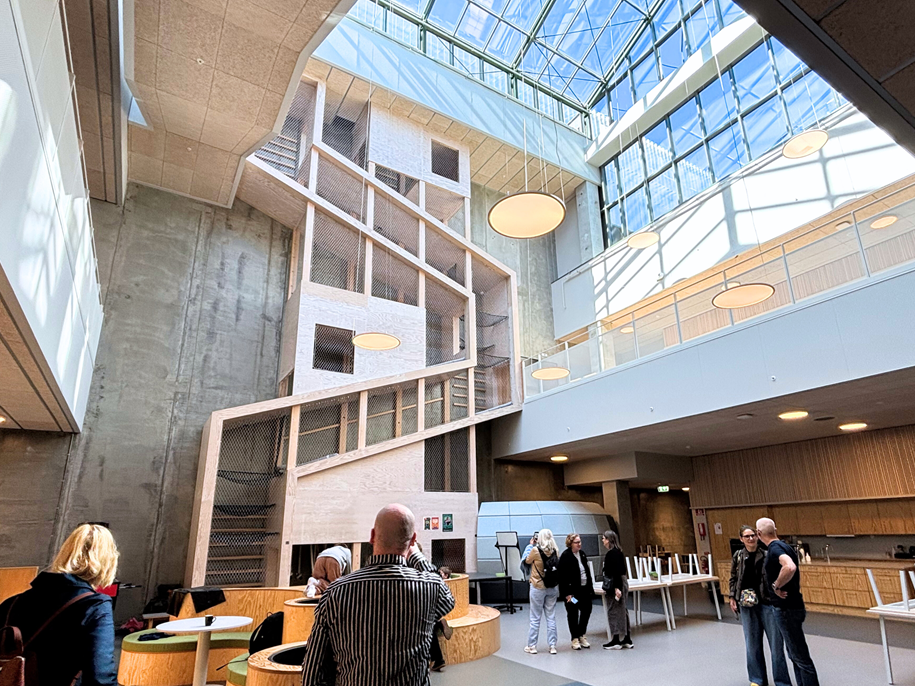
Designing for learning and wellbeing
The Nordic LED (Learning Environments Design) project is a pioneering initiative that brings together researchers, architects, educators, and municipalities across Finland, Iceland, Norway, Denmark, and Sweden. Coordinated by the University of Jyväskylä and funded by Nordplus Horizontal, the project aims to explore how learning environments can be designed to enhance teaching, learning, and wellbeing.
 Link copied



Research meetings and school visits
The Royal Danish Academy and Ecophon, who are partners in the project, hosted a multi-day research meeting in Malmö and Copenhagen in May 2025. The event featured school visits, collaborative workshops, and the testing of a new School Space Observation Framework. Participants toured innovative schools such as Gantofta, Sluseholmen, Hellerup, and Stengård, each showcasing different approaches to inclusive, sustainable, and flexible learning environments.
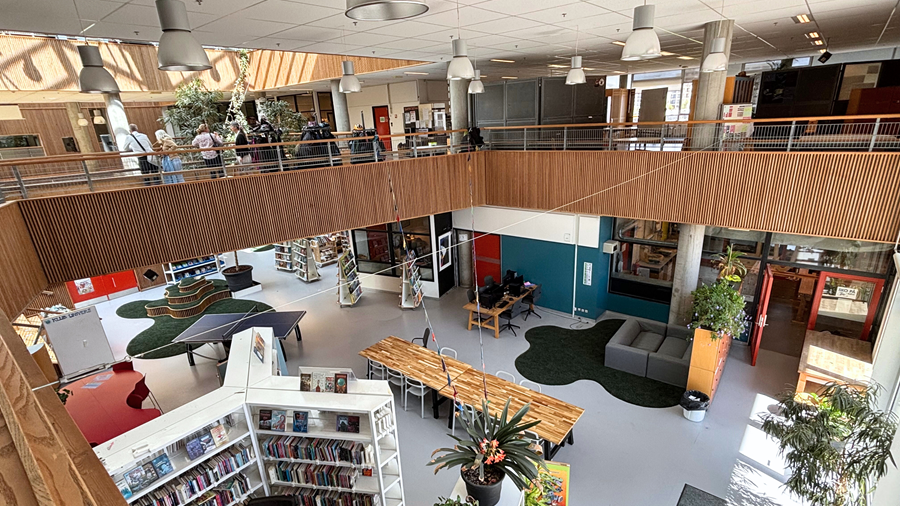
Built in 2002, Hellerup School in Denmark is a pioneer in modern learning environments in the Nordic countries.
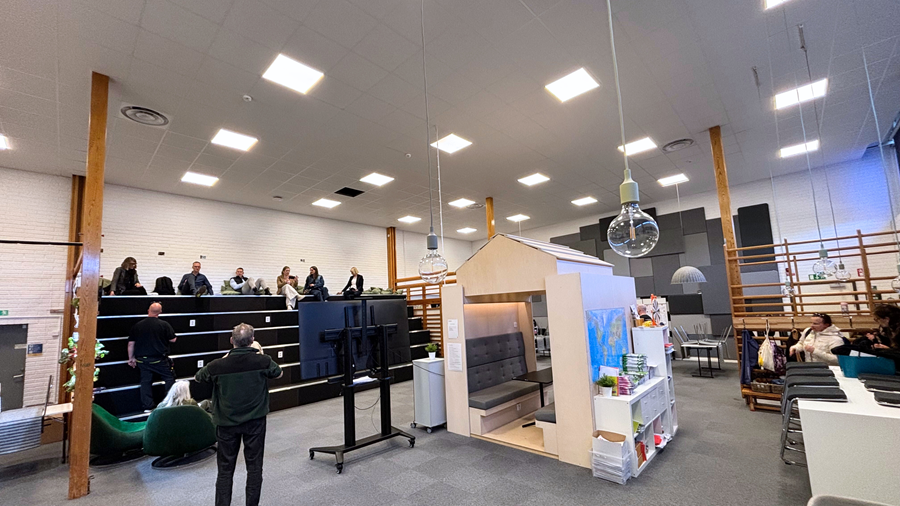
Gantofta School in Sweden transformed its former sports hall into an open, flexible learning environment that supports modern teaching and collaboration.
Design principles and participatory approach
At the heart of the LED Nordic project is a multidisciplinary approach that integrates pedagogical, architectural, and technical perspectives. Drawing inspiration from global initiatives like Australia’s ILESE (Innovative Learning Environments and Student Experience), the project seeks to foster international dialogue and apply best practices in the Nordic context.
Sound is constant in schools, and acoustic design is vital for the wellbeing of both students and staff.
Acoustics among the key considerations
One of the standout features of Nordic school design is its emphasis on participatory processes. Teachers and students are actively involved in shaping their environments, ensuring that spaces reflect real educational needs. This participatory ethos is complemented by a strong focus on sustainability and wellbeing, with acoustic design playing a critical role. As Pauli Pallaskorpi from Ecophon Finland notes:
“Sound is constant in schools, and acoustic design is vital for the wellbeing of both students and staff.”
Training and adaptation
The rise of open and flexible learning spaces across the Nordics presents both opportunities and challenges. These environments support modern pedagogies but require thoughtful acoustic solutions and user training. For example, Hellerup School provided over 100 hours of training to help staff and students adapt to their new spaces – highlighting the importance of aligning physical design with educational practice.
When spaces are designed well and users are supported in using them, both learning and wellbeing are enhanced.
Future goals and conclusion
Tiina Mäkelä, the project’s lead researcher, emphasises that the ultimate goal is to produce a practical guide based on evidence and best practices. This guide will serve designers, educators, and policymakers, helping them create environments that truly support learning and wellbeing. Mäkelä explains:
“When spaces are designed well and users are supported in using them, both learning and wellbeing are enhanced – not only in the Nordics, but globally.”
The LED Nordic project runs until spring 2026, with aspirations to expand its scope through additional funding and international collaboration. As the research continues, it promises to shape the future of educational spaces – making them more inclusive, sustainable, and effective for generations to come.

Participants in the LED research meeting in May 2025.
More about the research project
- LED Nordic is coordinated by the Innovative Learning Environments research group at the Finnish Institute for Educational Research, University of Jyväskylä. Funded by Nordplus Horizontal.
- The Project runs from 1 May 2024 to 30 April 2026.
- Partners include: University of Jyväskylä, Saint-Gobain Ecophon, Oppimaisema Oy, City of Helsinki, Raija Kattilakoski (consultant), University of Iceland, City of Reykjavik, Royal Danish Academy, Municipality of Gladsaxe, Aarhus University, University of Oslo, and Norconsult Norway.
- The meeting in May 2025 was co-hosted by Bodil Bøjer, Associate Professor at the Royal Danish Academy, Ida Cederlund, Concept Developer for Education Environment in Sweden and Colin Campbell, Global Concept Developer for Education Environments, both with Saint-Gobain Ecophon.
- Read more on the University of Jyväskylä's website.