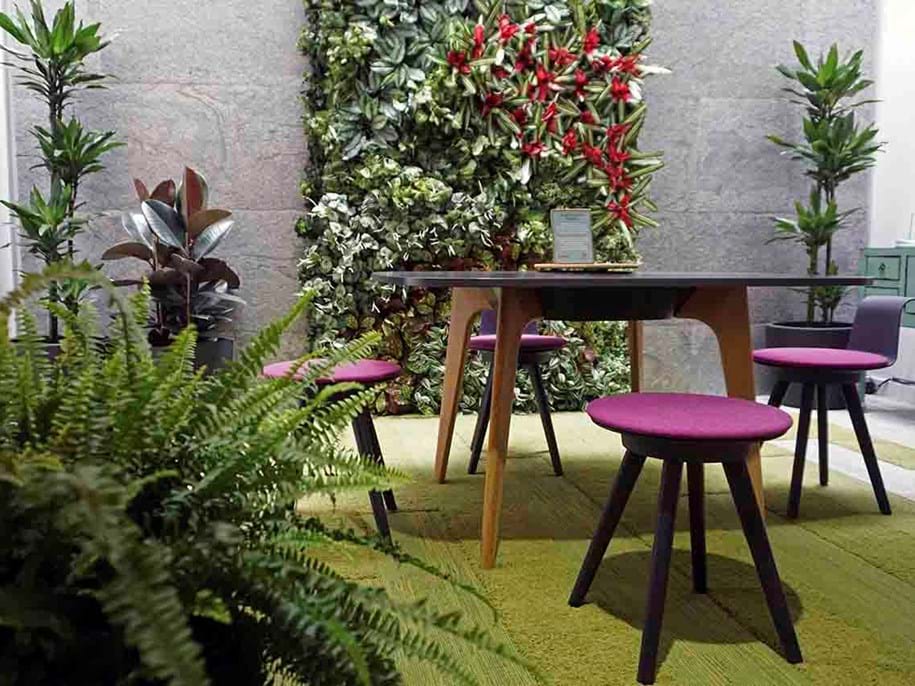
Biophilic Acoustic Design: Bringing Nature into Sound Environments
Ever walked into a gorgeous office that felt more like a buzzing marketplace than a workspace? Or a hospital ward where the constant echo made rest impossible? At Ecophon, we believe design isn’t only about what meets the eye, it’s also about what meets the ear.
Did you know that we spend nearly 90% of our time indoors (World Green Building Council, 2023)? If our indoor environments don’t nurture us, they drain us. That’s where biophilic acoustic design comes in, an approach that combines the restorative power of nature with the science of sound. We believe that this isn’t just a design choice and is the next step towards healthier lecture halls, workplaces, and healthcare environments.
What is Biophilic Acoustic Design?
Biophilic acoustic design is a multi-sensory feast. It’s a strategy that connects people to nature while also controlling noise. When implemented thoughtfully, it combines:
- Visual Connection to Nature: Think earthy colours, leafy patterns, organic shapes, and natural textures that breathe life into a space.
- Auditory Comfort: Acoustic panels, ceilings and baffles that dampen echoes, muffle background noise, and make conversations clearer.
- Multi-Sensory Well-Being: When sight and sound align with natural cues, people feel calmer, less fatigued, and more engaged.
This isn’t just attractive interior décor. This is a design approach with deep roots in WELL Building Standards and certifications like LEED that look at the quality of the indoor environment from the perspective of well-being and sustainability.
Why It Matters?
Noise is more than an inconvenience. In offices, it disrupts concentration. In classrooms, it hinders learning. In hospitals, it impairs healing. The good news is that bringing biophilic acoustic design into your spaces turns all this around.
Here’s what the research says:
- Fewer sick days: A Steelcase case study showed that nature-inspired layouts reduced sick days by 12%.
- Cognitive boost: Harvard researchers found that employees in green-certified offices took 30% fewer absences due to sickness and 26% higher cognitive function scores.
- Healthier workers: According to a University of Oregon study, employees with views of nature took 16% fewer sick days, on average 57 hours per year, compared to 68 hours when they had no views.
- Productivity gains: Studies show that simply adding plants to an office space can increase productivity by up to 15%.
- Better healing: Biophilic interventions have been shown to reduce inpatient stays in hospitals by an average of 18% (about one day shorter).
So, the takeaway is simple: when spaces both look alive and sound calm, people thrive.
Practical Ways to Apply Biophilic Acoustic Design
1. Nature-Inspired Acoustic Panels
Why not treat ceilings and walls like you would a living room wall? Instead of sterile white, pick natural shades, forest greens, ocean blues, sandy neutrals, and patterns that mirror the natural world, leaves, wood grain or waves. Ecophon Focus™ A panels offer design flexibility while absorbing sound at top performance levels.
2. Work with Natural Light and Views
Don’t block daylight. Choose translucent acoustic materials that allow light to pass through. Arrange acoustic baffles to mimic the spacing and rhythm of skylights or windows, creating a connection to the outdoors.
3. Choose Sustainable Materials
Eco-friendly design is not a trend. It’s a must. Ecophon acoustic panels are made of recycled glass wool, which reduces environmental impact while still delivering high acoustic absorption. This helps contribute to WELL, LEED or BREEAM certification in buildings.
4. Blend with Plants and Green Walls
Greenery is more than just Instagrammable décor. It can absorb sound and clean the air. So why not mix it with acoustic panels and make the most of two great benefits? Research shows that offices with an abundance of plants not only see the 15% productivity jump mentioned earlier but also report higher job satisfaction and lower stress.
Real-Life Case Studies with Ecophon
Theory is great, but let’s see what biophilic acoustic design looks like in practice.
1. National School of Architecture, Lyon
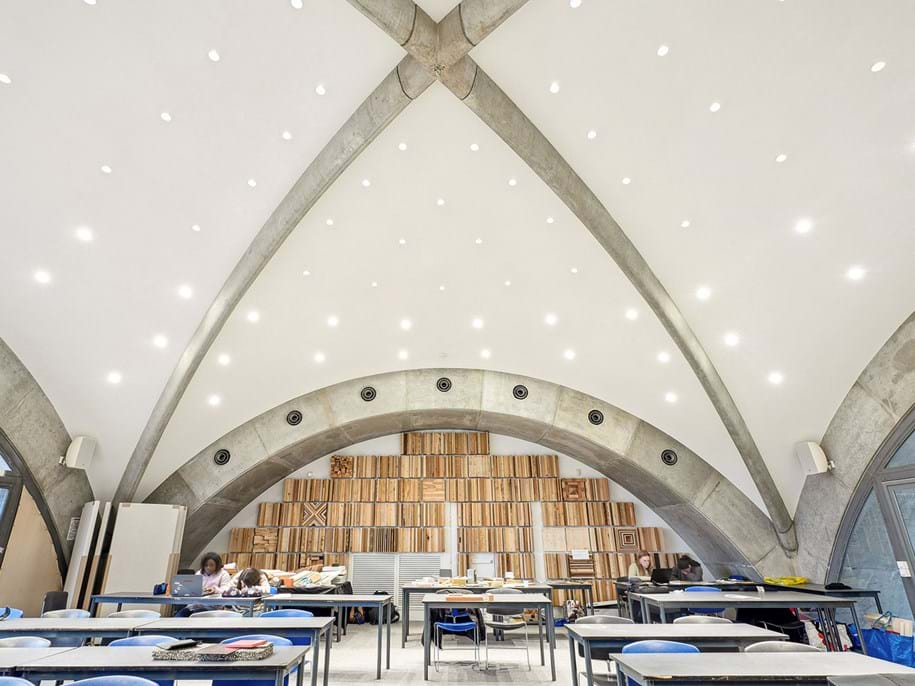
Ecophon was recently involved in a project at the Lyon’s National School of Architecture (ENSAL). The building, constructed in the 1980s, features bold, vaulted ceilings that look great but cause acoustic chaos. In 2024, Ecophon Fade™ acoustic plaster was applied to a 143 m² teaching room to give the space the acoustic comfort it deserves. The result?
- Reverberation reduced from 1.9 seconds to 0.6 seconds
- Students reported clearer speech, calmer classroom environments and much less fatigue.
- Seamless integration and finish that respected the character and feel of the historic building.
Students now learn in a visually inspiring environment that also sounds crystal-clear.
2. The National Gallery, London
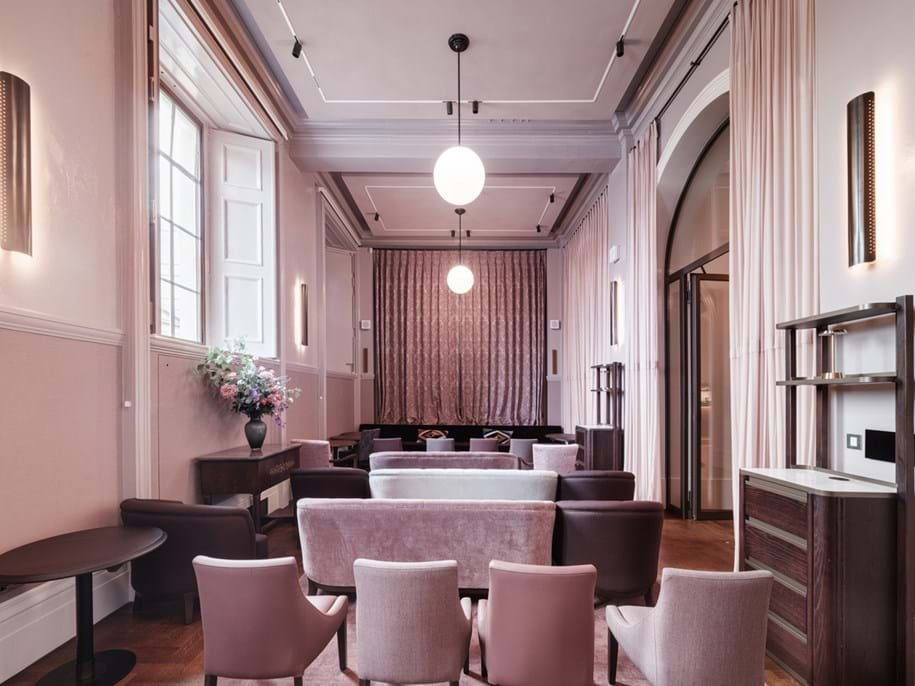
Heritage buildings often face challenging acoustics due to their tall ceilings and hard surfaces. London’s National Gallery’s Supporters’ House – an exclusive members-only room – was no exception. The solution: Ecophon Fade™ ONE Smooth ceiling panels in custom colours.
This upgrade delivered:
- Better clarity of speech and more balanced acoustics
- Easy integration with the gallery’s iconic interiors
- Flexibility for events such as talks without compromising on elegance
3. Svanemølle Royal Danish Defence, Copenhagen
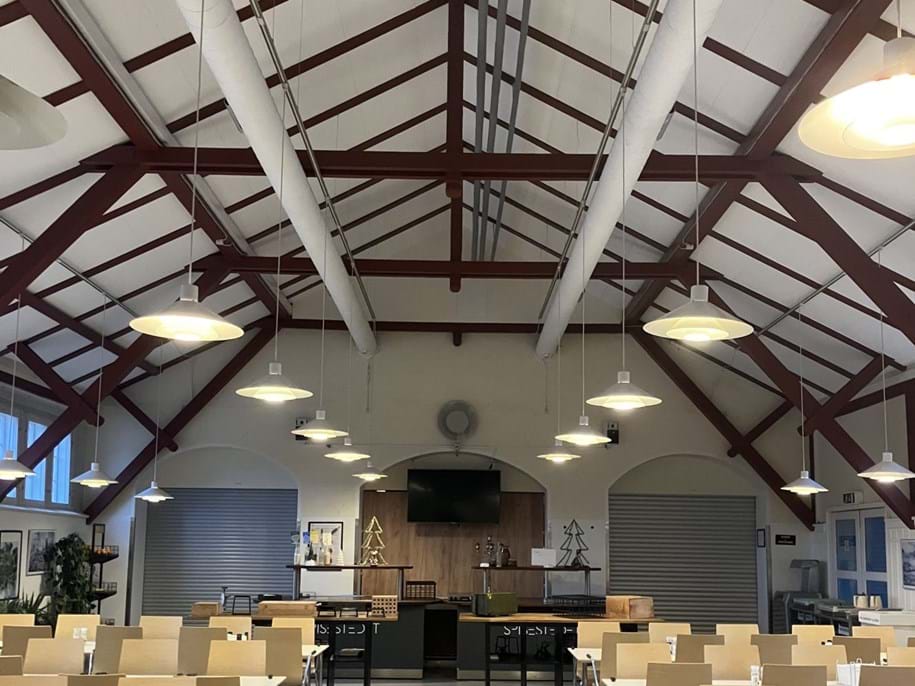
This recent project at Svanemølle Royal Danish Defence, Copenhagen, posed a variety of challenges across stairwells, a historical canteen and office spaces. Ecophon worked closely with the architect and contractor to fine-tune the solutions for each of these different areas.
- Stairwells: Ecophon Master™ F + Akusto™ Wall A absorbers → reduced reverberation and clearer sound
- Canteen: Master F for the high ceiling, Akusto™ Wall C for the lower part → calmer dining experience
- Offices/meeting rooms: Ecophon Clipso™ So Aero panels in frames → improved acoustics with additional aesthetic value
A balanced, functional and attractive acoustic upgrade across the entire space.
Biophilia Across Sectors
Biophilic acoustic design is incredibly versatile, easily adaptable to different sectors and workspaces.
- Workplaces: Sharper focus, reduced stress, stronger collaboration. A leafy corner and some quiet ceiling tiles can do more to inspire creativity than a fancy coffee machine.
- Education: Distraction-free classrooms = more learning. Students can hear and listen better in a more calming atmosphere with less echo.
- Healthcare: From faster healing to calmer staff, acoustic comfort and natural visuals improve outcomes for patients and workers.
- Hospitality: Hotels and restaurants use biophilic acoustic design to create memorable stays. After all, nobody posts a great review about a hotel lobby that gave them a headache.
Ecophon’s Approach to Biophilic Acoustic Design:
At Ecophon, we see science and design elegance as two sides of the same coin. Here are our key features:
- Expert Consultations: Work with us to match acoustics with biophilic goals. We consult with architects, designers, and facility managers.
- Customisation Tools: Choose colours and patterns that fit your project vision with our Colour Your Acoustics feature.
- Sustainability Built-In: Panels made with recycled glass wool will help your building meet WELL, LEED and other eco-certifications.
- End-to-End Support: We’re with you every step of the way, from design to on-site installation, to make sure your project looks beautiful and sounds even better.
Conclusion:
Biophilic acoustic design is not just about filling up spaces with plants or splashing green paint on the walls. It’s about creating spaces that recharge us instead of draining us. Spaces that don’t just look alive and feel peaceful, but also work smarter.
With Ecophon’s nature-inspired acoustic solutions, you can design and build workplaces, schools, hospitals, and hospitality venues that don’t just meet standards, they set new standards.
So are your spaces working against you, or are they working for you?
 Link copied