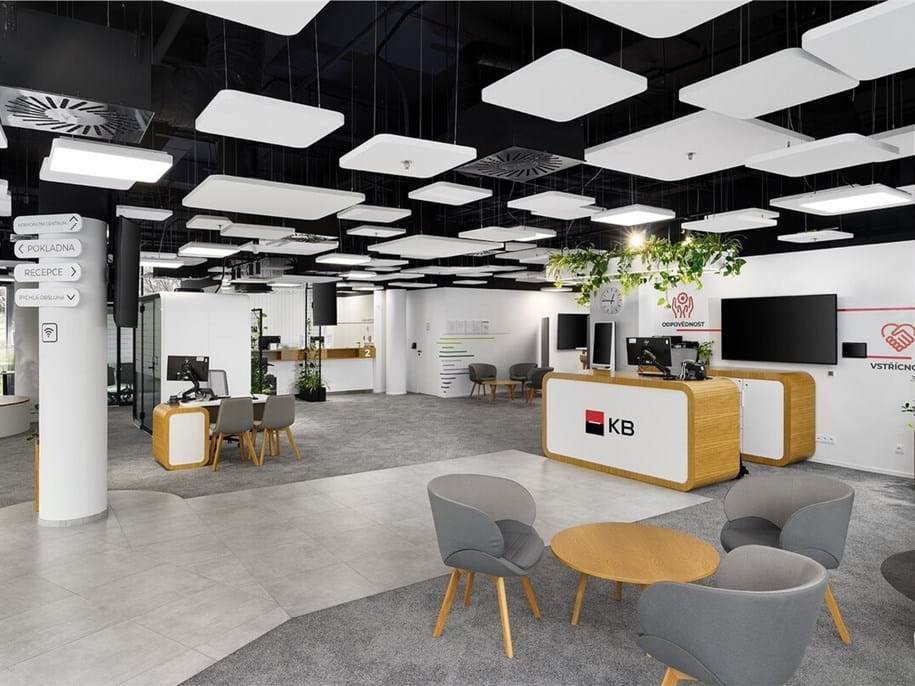
How Ceiling Panels Improve Room Acoustics in Large Indoor Spaces
Poor acoustics is one of the major challenges in large indoor spaces like offices, auditoriums, airports, restaurants, classrooms, and shopping malls. The repetitive bouncing of sound on hard floors such as concrete ceilings, glass walls and flooring, creates issues like echoes, noise build-up, and communication difficulties.
 Link copied



This is where ceiling panels become a key architectural solution. Installing acoustic ceiling panels for ceiling or acoustic ceiling systems can greatly enhance the quality of sound by absorbing sound energy, and reducing reverberation.
Acoustics in modern building design are currently as important as lighting, ventilation and interior design or decor. A well-designed acoustic ceiling assists in developing comfortable environments in which individuals are able to communicate effectively, focus more, and work more productively.
This guide explains the effectiveness of ceiling panels in enhancing acoustics in large indoor spaces, the science behind their effectiveness, and the growing popularity of high-performance acoustic panels among architects today.
Understanding the Problem of Poor Room Acoustics
Sound acts differently in big open spaces compared to small rooms. When sound waves cover a vast region they are reflected off more than one surface and it disappears. Having no sound absorption, these reflections do not disappear and produce an overabundance of noise.
The most prevalent types of acoustic issues in the large spaces are as follows:
- Echo and reverberation
- Speech becoming unclear
- Background noise buildup
- Difficulty concentrating
Most large buildings exceed these figures without appropriate acoustic treatment resulting in an uncomfortable and noisy indoor environment. This explains why more and more architects and building designers are investing in ceiling panels and acoustic ceiling systems to regulate the sound reflections.
What Are Ceiling Panels and How Do They Work?
Acoustically engineered ceiling panels are special construction materials installed on ceilings to absorb sound energy instead of reflecting it.
These panels are normally constructed using sound absorbing materials like:
- Mineral wool
- Glass fiber
- Acoustic cores made of fabric.
- Sound-absorbing reinforced perforated panels.
When sound energy hits the surface of acoustic panels for ceiling, the energy penetrates into the porous substance inside the acoustic panel. Sound energies are then slowly eliminated by friction between particles of air and the fibers of the material. This converts sound energy to a small bit of heat that is unable to revert into the room.
Consequently, the level of noise is reduced and the space becomes acoustically well. One of the metrics that are employed to measure the performance of acoustic ceilings is the Noise Reduction Coefficient (NRC).
This rating is used to determine the absorption of a material of a sound on a scale between 0 and 1. Ceiling panels of high quality may have NRC rating between 0.75 and 0.85, which implies that they absorb a large percentage of the sound energy reflected to it.
Why Ceilings Are the Most Effective Surface for Acoustic Treatment
The most significant untreated surface area for acoustic treatment would be ceilings in large indoor spaces. Due to the upward movement and reflection of sound on overhead surfaces, untreated ceilings tend to be a major source of reverberation and echo.
Ceiling acoustic panels installation is thus among one of the best methods of enhancing the quality of sound in an area.
Sound absorbing materials that are applied on ceilings enable equal distribution of acoustic absorption throughout the room. This decreases the reflections of the sound and brings out a well balanced auditory atmosphere.
Numerous researches on architectural acoustics have emphasized that a complete covering acoustic ceiling is fully able to cut reverberation over a range of frequencies to enhance ease of listening as well as speech intelligibility.
Organizations, which operate in the sphere of building acoustics, like Ecophon, also stress the role of sound absorption based on ceilings as the way to create the interior environment in which people may communicate and concentrate more productively.
Key Ways Ceiling Panels Improve Room Acoustics
- Reducing Echo and Reverberation
One of the most significant advantages of ceiling panels include minimization of echoes.
In spacious rooms with hard floors, sound waves reflect endlessly between floors, walls, and ceilings. The effect of this is long reverberation times and high levels of background noise.
These reflections are first absorbed by installing acoustic ceiling systems before they spread throughout the space. Ceiling acoustic panels can greatly reduce noise levels in most business settings to provide occupants with more comfortable and quieter space.
- Improving Speech Clarity
A high level of communication is important where there are classrooms, lecture halls, offices and in conference rooms.
During high reverberation, overlapping of voices makes speech difficult to understand. One way of solving this issue is by using ceiling panels that absorb mid-frequency sounds; which are the frequencies most related with human speech.
Improved ceiling acoustics, increases speech intelligibility by 40-45 percent, and the conversation can be clear and easy to follow.
This especially matters in the learning settings when students have to hear the teachers and the presentations clearly.
- Controlling Background Noise
Large structures can have numerous and various sources of noise that include:
- HVAC systems
- Office equipment
- Footsteps and movement
- Chats in the surrounding localities.
Unless such sounds are well acoustically treated, they build up and add to the overall noise levels.
The acoustic panels installed on the ceiling can absorb such background sounds, and it will ensure the inside environment is less noisy. This would enable individuals to focus more without complications particularly in workplaces and classrooms.
- Enhancing Workplace Productivity
One of the most frequent forms of distraction in this day and age office setting is noise, and specifically open offices.
There is a possibility to be distracted by frequent conversations, phone calls, and noise of equipment, making employees unable to concentrate on work.
Organizations can mitigate these distractions by having ceiling panels installed to enable an environment that promotes concentration and cooperation.
Acoustic studies conducted in workplaces indicate that a better acoustic environment can lead to a 30 percent or more improvement in the concentration levels and accuracy of tasks in the workplace.
This is why acoustic ceiling systems are significant in modern office design.
- Creating Comfortable Learning Environments
Educational spaces need good acoustics in order to facilitate proper learning.
When acoustics are poor, students sitting at the back of the classrooms are not likely to hear instructors clearly.
Teachers are also compelled to speak in high levels to be heard hence straining their voices.
Installing acoustical panels for the ceiling helps spread sound evenly through the room and suppress echo.
Better acoustics can help:
- Enhance communicative ability.
- Reduce teacher vocal strain
- Enhance activity of students.
Due to these advantages, acoustic ceiling systems are common in training facilities, lecture halls as well as in classrooms.
- Improving Privacy in Shared Spaces
Sound privacy is a major issue in several indoor settings like offices, hospitals and meeting rooms.
Conversations may spread over a long distance and disturb other people unless they are properly acoustically treated.
Ceiling panels are used to restrain the distance to which voices are spread, absorbing the sound energy and minimising the reflections. This enhances sound privacy and assists in making matters confidential in the shared setting.
acoustic ceilings might also be involved in the greater control of speech transmission and help to minimize the leakage of sounds between various spheres of the building.
Importance of Acoustic Design in Modern Architecture
The concept of acoustics has become a very important factor in the design of buildings today among the architects. Modern architecture has the ability to provide a challenging sounding environment, which may be created by means of open spaces and reflective surfaces like glass and steel.
Even visually spectacular locations will not be comfortable with the noise that surrounds them without acoustic treatment.
The modern acoustic ceiling systems enable architects to incorporate sound management without affecting the appearance. Ceiling panels can be developed to match lighting systems, ventilating structures, and interior designs.
Companies that deal with architectural acoustics such as Ecophon aim at coming up with sound absorbing ceiling and wall construction to aid in enhancing the acoustic comfort of the interior environment. Their work highlights the significance of designing buildings in a manner that promotes visual design and also acoustic wellbeing.
Where Acoustic Panels for Ceiling Are Commonly Used
The acoustic ceiling systems are very effective thus being common in most building types.
The uses common to them include:
- Coworking spaces and corporate offices.
- Learning institutions like classrooms and lecture halls.
- Medical institutions with serene settings that aid healing of patients.
- Hotels and restaurants.
- Public buildings like airports, libraries, auditoriums and others.
The well-designed ceiling panels will assist in the creation of more balanced and comfortable sound conditions in all these environments.
Long-Term Benefits of Installing Ceiling Panels
There are various long-term effects of installing acoustic panels for the ceiling.
- First, they enhance the communication through the minimization of echo and background noise.
- Second, they aid productivity and learning since they can provide environments to facilitate easier concentration of people.
- Third, modern-acoustic ceiling systems may also serve as a sustainable building design with the help of their materials that can help to create healthier indoor environments.
Overall, these systems allow improving the quality of indoor spaces through the establishment of a peaceful and balanced acoustic environment.
Conclusion
Sound is significant in how people experience indoor settings. Big rooms may easily become an unpleasant place to work, study, or communicate in due to the uncontrolled sound reflections.
The ceiling panels, acoustic ceiling systems, and ceiling acoustic panels are an effective answer to controlling the sound reflections and enhancing the acoustic comfort.
Capturing sound energy and suppressing reverberation, the systems turn noisy environments to the ones that facilitate the communication process, productivity, and wellbeing.
With the growing attention to the human-centered design in modern architecture, acoustic solutions are starting to play a crucial role in the planning of buildings. Firms engaged in the architectural acoustics business like Ecophon also help in this approach by coming up with sound absorbing ceiling systems that can help generate a healthier and more acoustically friendly interior environment.
Enhancing acoustics in the large indoor spaces is not only concerned with noise reduction, but in building spaces where people can effectively communicate, concentrate, and perform optimally.
FAQs
- What are ceiling panels used for in acoustics?
To prevent sound waves echoing in a room, ceiling panels are installed to absorb the sounds. They are used in order to manage reverberation as well as enhance clarity in speech indoors.
- How do acoustic panels for ceiling reduce noise?
Ceiling acoustic panels are made of porous material to absorb sound energy. As sound enters the panel, energy is lost in friction in the material, and this decreases the number of reflections and the level of noise.
- Where should acoustic ceiling panels be installed?
They are usually placed in huge interior areas like offices, classrooms, conferences, hospitals, restaurants, and auditoriums.
- Why are acoustic ceiling systems important in modern buildings?
In modern buildings, materials like glass and concrete are used to reflect sound. The acoustic ceiling systems absorb these reflections enhancing speech quality, comfort and the overall indoor acoustic quality.