10 Modern Ceiling Design Ideas with Acoustic Panels for Stylish Interiors
The concept of modern interiors is no longer defined by furniture and wall decor only. Ceilings today are increasingly becoming a significant feature in the design of a space that determines its visual identity. Architects and interior designers now focus on ceilings turned to ceilings to add more depth, creativity, and functionality to modern interiors.
 Link copied



Nevertheless, aesthetics are not sufficient. Today modern structures feature open floor plans, glass enclosures, concrete floors, and high roofs. These materials look very modern, but they tend to cause sound problems, including echoes and noise buildup.
Acoustic panels come in handy at this point. Architects can also ensure the quality of sound by putting up acoustic ceiling panels and at the same time improve the aesthetics of the ceiling. These panels absorb the sound reflections and contribute to the provision of a comfortable internal environment.
In modern buildings, acoustic performance along with the sleek ceiling style has been given the main priority. This guide will help you delve into the top 10 modern ceiling design ideas with acoustic panels that assist in the creation of a beautiful and functional interior.
Why Acoustic Panels Are Important in Modern Ceiling Design
Noise levels can easily become irritating in many commercial and public spaces. Reflection of sounds in open offices, restaurants, classrooms, and conference halls frequently creates problems with communicating.
Installing acoustic panels on ceilings reduces reverberation and echo. These panels absorb sound waves that bounce off the room. This makes the space less noisy and the conversation more understandable.
The other benefit of acoustic ceiling panels is that they can be designed in a flexible manner. They come in various shapes, finishes, and styles of installation. This enables the architects to make ceilings appealing to the eye whilst maintaining good acoustic performance.
These advantages have seen the acoustic panels being used in offices, hotels, retail outlets, learning institutions, and hospitality areas.
10 Modern Ceiling Design Ideas with Acoustic Panels
- 1. Linear Ceiling Designs with Acoustic Panels
Linear ceiling designs are very common in modern-day commercial interiors. These are acoustic panels that are placed in straight parallel lines on the ceiling in this concept.
The style brings an orderliness and clean look. It works very well in big offices and business places where an orderly appearance is desired.
Linear acoustic ceiling panels guide the eye along the line of the space that gives the interiors the effect of being larger and more modern.
- 2. Suspended Acoustic Baffle Ceilings
Vertical acoustic panels, also known as baffles, are suspended ceilings that have gained much popularity in recent architecture.
These panels are suspended vertically from the ceiling instead of on the entire surface of the ceiling. This construction enables them to absorb sound in many directions.
Suspended acoustic panels work effectively well in buildings with high ceilings like atriums, open offices, and big dining rooms. At the same time, they produce a very dramatic rhythm across the ceiling.
- 3. Geometric Ceiling Patterns
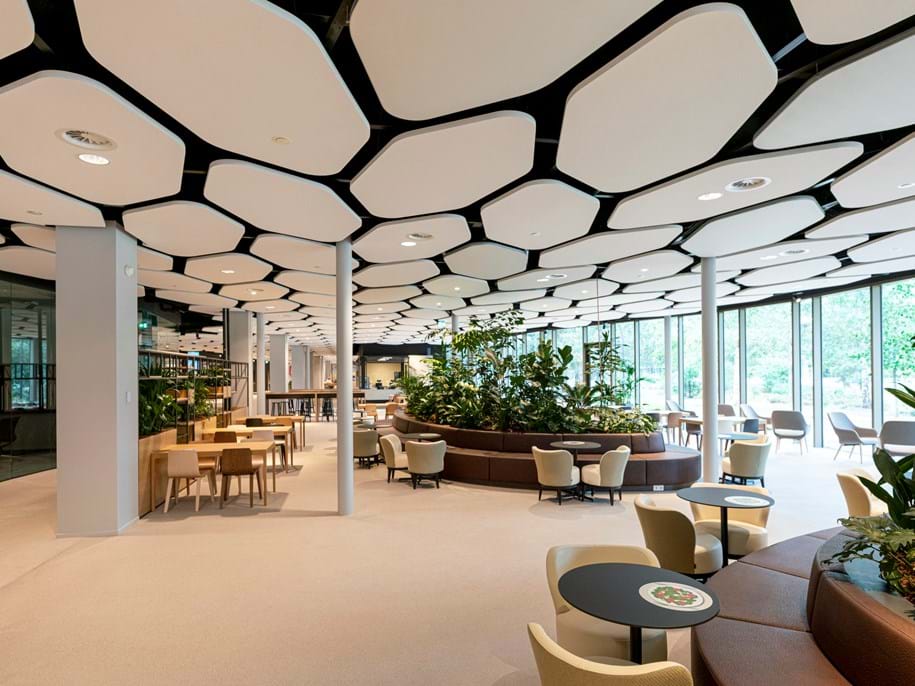
Geometric ceiling designs add uniqueness and creativity to interior spaces. Acoustic panels are arranged in shapes like hexagons, diamonds, or triangles.
This style of design is particularly common in the works of creative offices and technology. The repetitive arrangement of acoustic ceiling tiles makes the ceiling a design element as opposed to a plain surface of structure.
Geometric designs also assist in the even distribution of sound absorption in the space.
- 4. Floating Acoustic Ceiling Panels
The floating ceiling design helps to give a perception that the panels will be suspended under the main ceiling framework. Designers make acoustic panels a bit lower than the ceiling, leaving some gap above the panels.
This design of the layered ceiling brings in depth and elegance to the interior.
The floating acoustic ceiling panels are often put in the reception areas, meeting rooms, and hotel lobbies. They are also compromising to place creative lights around the panels that improve the overall appearance.
- 5. Wooden Acoustic Ceiling Panels
The popularity of natural materials in modern interior design is on the rise. Acoustic panels with wood add warmth and elegance to a place and do not interfere with acoustic performance.
Such acoustical ceiling panels are commonly employed in high-end settings like luxury offices, restaurants, hotel lounges, and cultural areas.
Biophilic design concepts are also supported by the use of wood tones, and they suggest building a closer relationship between nature and indoor settings.
- 6. Curved Acoustic Ceiling Designs
Curved ceilings produce a sense of movement and fluidity in interior architecture. Special acoustic panels that have been designed into curved or wave-like shapes are utilized by designers to create curved or wave-like ceiling designs.
This type of ceiling is commonly found in auditoriums, lecture rooms, and other big conference rooms.
Curved acoustic ceiling panels assist in distributing the sound evenly across the room in addition to providing a visually dynamic ceiling design.
- 7. Clustered Acoustic Panel Layouts
Designers arrange acoustic panels in clusters rather than covering the entire ceiling. This method installs clusters of panels in the places where it is needed the most to absorb the sound.
The clustered acoustic ceiling panels are ideal in open offices, areas involving teamwork, and restaurant seating.
This creates a customizable ceiling design with specific acoustic treatment that offers an interesting appearance at the same time.
- 8. Acoustic Panels with Integrated Lighting
The ceiling systems nowadays usually have more than one use. One of them is the incorporation of lighting in acoustic panels.
A continuous system of acoustic ceiling can be installed with LED lighting between or around the acoustic ceiling panels with both light and sound control.
The design is also common in offices, meeting rooms, and contemporary shops where a minimal and clean appearance at the ceiling is preferred.
- 9. Colored Acoustic Ceiling Panels
The most popular ones are neutral ceilings, but most designers today make use of colored acoustic panels to add character to the interior spaces.
The different colors are capable of affecting the mood of a room. Bright colors can create energetic spaces in collaborative or learning areas, while pastel ones can be used in the offices and health facilities to make them serene.
Colored acoustic ceiling panels also enable the companies to project the brand identity in the workplace.
- 10. Open Ceiling Concepts with Acoustic Panels
Industrial-style interiors feature exposed ducts, pipes, and structures. Although this open ceiling design appears to be modern, it may lead to sound issues.
The strategic placement of acoustic panels in open ceilings assists in absorbing sound and not concealing the industrial structure.
This would enable the architects to preserve the open nature of the architecture and ensure more comfortable acoustics in the building.
Ecophon: Supporting Modern Acoustic Ceiling Design
Design ideas are not the only way of creating a stylish ceiling. It also needs to have high-performance acoustical materials that can provide credible sound control even in real environments.
Ecophon is well recognized for coming up with acoustic ceiling systems that deal with architectural design and acoustic performance. The company is working on ensuring that the modern buildings have good environments that facilitate communication, concentration, and comfort.
Ecophon applications are typically applied in offices, schools, health care, and commercial interiors where the quality of sound is significant in daily operations.
One of the main strengths of the Ecophon systems is their focus on indoor environmental quality. Their acoustic panels have been designed to fit various architectural ideas, whether the design involves floating ceilings, suspended systems, or decorative ceiling layouts.
One more significant feature of Ecophon systems is paying attention to the quality of the indoor environment. These acoustic ceiling panels make the indoors healthier and more productive by enhancing clarity in the speech and lowering the noise levels.
Many architects and designers tend to use the Ecophon products in cases when they want to be sure that their ceiling designs will provide adequate aesthetics and effective acoustics.
The Growing Role of Acoustic Panels in Interior Design
Acoustic design is more essential to modern buildings than ever since they are being designed with the trend towards an open plan and collaborative working environment.
Ceilings are no longer regarded as the background structures. On the contrary, they are currently utilized as design elements that determine the aesthetic and comfort of a room.
The acoustic panels can be used with flexible forms, colors, and also modes of installation, as this gives the architects an opportunity to experiment with the idea of creative ceilings and also provides the architects with the ability to control the sound at very good levels.
Acoustic ceiling panels are changing the modern interior designs of offices and other educational buildings, as well as hospitality and retail settings.
Conclusion
Modern interior style requires a balance between functionality and aesthetics. Ceilings have been the major component of this strategy, as they assist in developing the nature of a space as well as aiding acoustic comfort.
Through acoustic panels, designers will be able to design ceilings that minimize noise, enhance communication, and improve other general space experiences.
It is possible to install acoustic ceiling panels on stylish interiors in many ways, including linear and floating designs, wooden finishes, and geometric patterns.
Using the new acoustic products of the Ecophon, architects will be assured of creating ceilings that will not only be beautiful to the eye but also provide quality sound environments.
FAQs
1. What are acoustic panels used for in ceiling design?
Acoustic panels absorb sound and lower echo in a room. They are used to improve speech and provide a comfortable acoustic environment in offices, restaurants, classrooms, and public buildings.
2. Are acoustic ceiling panels suitable for modern interiors?
Yes, the acoustic ceiling panels are an extremely popular interior design element in modern buildings, as they provide control over the sound and at the same time have a decorative appearance on the ceiling.
3. Can acoustic panels be used as decorative ceiling elements?
Yes. Modern acoustic panels can be found in various shapes and colors, as well as finishes, and this is why they can be used by architects as decorative design elements.
4. Why are acoustic panels important in open spaces?
Open spaces create noise problems due to the reflection of sounds. The use of acoustic panels is used to control reverberation and enhance the overall sound environment.