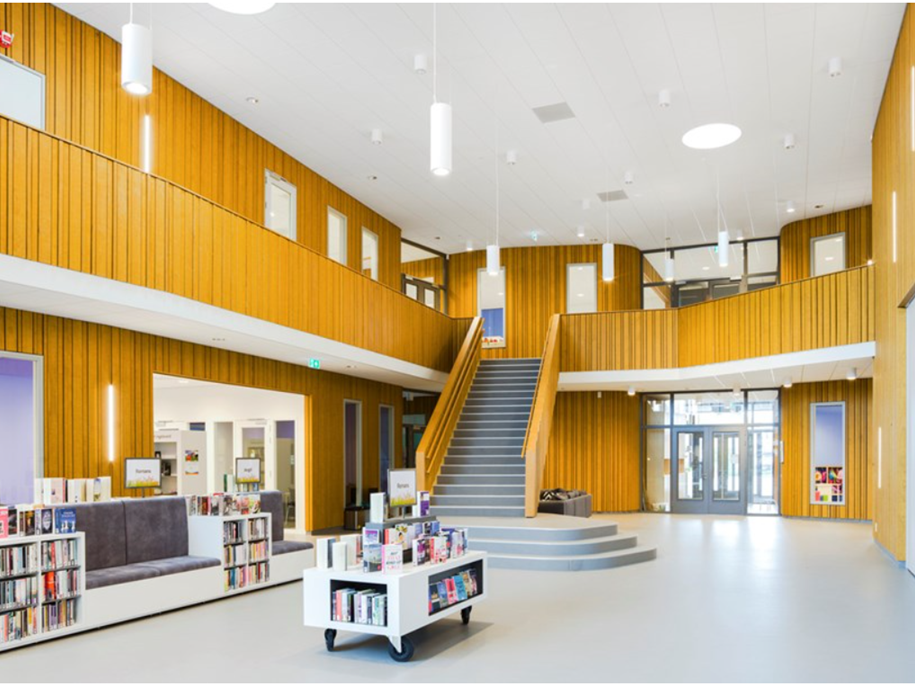
Types of Ceiling Systems Used in Modern Commercial Spaces
A modern business venue is supposed to not only appear good but also to fulfil numerous tasks. The offices, hospitals, schools, airports, shopping malls, hotels and government buildings should be comfortable, practical as well as healthy to the human beings who visit them daily. The ceiling system is one of the most crucial factors which contribute to these objectives.
 Link copied



Previously, the ceilings could primarily be denoted as structural or ornamental. They are now significant in sound control, interior comfort, lighting integration, ventilation support and general aesthetics. Noise control is particularly needed in the commercial areas where people engage in communication, movement, and work in high density.
Ecophon is a member of the Saint-Gobain Group that is a world leader in acoustic ceiling and wall management. Ecophon products are meant to provide a good sound environment that is conducive to productivity, health and well being and have fulfilled modern architectural and sustainability requirements.
This paper describes the primary categories of ceiling systems applied to contemporary commercial areas, their advantages, and benefits of Ecophon solutions in order to enhance the indoor environment.
Why Ceiling Systems Are Important in Commercial Buildings
Commercial buildings are of great concern in noise. Noises in the conversations, office machines, pedestrian traffic, and mechanical systems may accumulate easily. When acoustics is not properly controlled, it can translate into stress, fatigue, distraction and lack of productivity.
An effective ceiling system can absorb sound and reduce reverberation and echo and make the speech more clear and the atmosphere more relaxed. Ceiling systems also assist to conceal electrical wire, air conditioning ducts, fire hazard apparatus, and even lighting systems, leaving the interiors of the buildings clean and well organised.
Ecophon is concerned with the people-based acoustic design. They do not only develop their ceiling systems to perform technically but also to make them comfortable to the humans. Good acoustics are necessary but not optional in the contemporary commercial spaces.
1. Grid Ceiling Systems (Advantage E, Opta E)
The most common ceiling solution in modern business buildings is grid ceiling systems. The systems comprise acoustic panels which are placed in a visible metal grid and hung under a structural ceiling. They provide accessibility of services above the ceiling as well as providing stable acoustic performance.
Ecophon Advantage E and Ecophon Opta E are common grid ceilings that are used in cost and functional spaces.
- Ecophon Advantage E is applicable in office, corridors, classrooms and retail areas where excellent sound absorption is needed and a clean look must be maintained at a cost effective level.
- Ecophon Opta E is a general commercial product that offers balanced acoustic performance, easy installation and maintenance.
Grid ceilings enable the light, HVAC system, fire sprinklers, and cables to be easy to integrate. The separate panels can be taken away or changed without disrupting the whole ceiling and hence the maintenance and any other future changes can be made easy and cheap.
These systems are normally installed in office buildings, schools, hospitals and commercial interiors where flexibility and functionality are a factor.
2. Direct Fix Ceiling Systems
Direct fix ceiling systems represent an application where there is no ability to have a suspended or grid ceiling. In such systems, the acoustic panels are firmly attached on the current structural ceiling using adhesive or mechanical fixations.
They are the best in areas that have low ceiling heights or renovation projects where high room height is necessary. Direct fix ceilings, though slim in profile, offer good sound absorbing capabilities and assist in enhancing comfort within the indoors.
Ecophon direct fix solutions can be found typically in small offices, meeting rooms, corridors, and retrofit projects. They also have a simple way of installing and provide a feasible option of acoustic solutions without significant work coupled with a building redesign.
3. Free-Hanging Acoustic Ceiling Systems
Free-hanging ceiling systems are either squares of acoustic panels, rafts, or baffles that are hung individually, without being attached to the ceiling. The systems are not a full-coverage ceiling as compared to the full-coverage ceiling ones.
They can be used in large areas and high ceilings where there is no necessity and desire of a fully closed ceiling. The free hanging elements capture the sound in different directions and retain an open and contemporary appearance.
The ecophon free-hanging solutions are excellent in sound performance as well as expressive design. They are frequently applied in open offices, lunch rooms, restaurants, auditoriums, airports, shopping malls, as well as industrial-style interiors.
4. Modular Ceiling Systems
Modular ceiling systems incorporate the use of regular acoustic panels which are installed in the organized design. These systems are resilient and robust, and simple to service.
The Ecophon modular ceilings can be checked, repaired, and upgraded easily as the panel can be removed and replaced easily. Even the lighting and ventilation layout may be changed without interfering with the entire ceiling.
They are common in the IT parks, office buildings, educational complexes and in large commercial complexes where they are necessary because of future adaptability.
5. Healthcare and Hygiene Ceiling Systems
Ceiling systems that are designed with high levels of hygiene and cleanliness are needed in healthcare and clean environments. These are hospitals, clinics, laboratories, and pharmaceutical facilities that require ceilings that would help manage infection and at the same time provide acoustic comfort.
Ecophon provides hygienic certified ceiling systems, which are easy to clean as well as moisture resistant and designed to inhibit particle emission. These ceilings contribute to the enhancement of patient comfort, staff communication, and reduction of stress without affecting the standards of hygiene.
6. Impact-Resistant Ceiling Systems
There are commercial settings that are heavily impacted in a physical sense. Normal ceiling systems might not be strong enough in such places.
The ecophon impact-resistant ceiling systems are developed to resist the physical stress and at the same time preserve acoustic performance. They are usually installed in school corridors, sporting institutions, transport terminals, and heavily populated public places.
These ceilings save on cost of maintenance, enhance safety and provide a long life performance.
7. Open-Plan Office Acoustic Ceiling Systems
Open plan offices are conducive to teamwork, however they are also characterized by too much noise and privacy of speech.
Open office ecophon ceilings are used to absorb sound, lessen reverberation and enhance the clearness of speech. It will enable employees to concentrate more, communicate and have reduced stress levels.
The acoustic ceilings are important in ensuring that the open-plan workspaces are plentiful and comfortable.
8. Indoor Environmental Quality and Sustainability
The ecophon ceiling systems are designed keeping sustainability in mind. They are the ones that promote good indoor air quality, lower the environmental impact, and fit the current green building standards.
Conclusion
Ceiling systems are an important part of the contemporary commercial interior. They impact acoustics, comfort, hygiene, life span and aesthetics. Since grid ceiling systems such as Advantage E and Opta E, direct fix, free-hanging, modular, hygiene, and impact-resistant solutions have their purpose.
Ecophon ceiling systems combine acoustic performance, durability, and sustainability to create quieter, healthier, and more productive commercial spaces across offices, healthcare, education, and public buildings.
Frequently Asked Questions (FAQs)
Which ceiling system is most commonly used in commercial buildings?
Grid ceiling systems are the most commonly used because they offer good acoustics, easy maintenance, and flexibility.
Are acoustic ceilings suitable for office spaces?
Yes, acoustic ceilings reduce noise, improve speech clarity, and help increase comfort and productivity in offices.
Can Ecophon ceiling systems be used in hospitals?
Yes, Ecophon offers hygiene-certified ceiling systems designed specifically for healthcare and clean environments.
Do ceiling systems improve acoustics in large open spaces?
Yes, acoustic ceiling systems absorb sound and reduce echo, making large open areas more comfortable and functional.