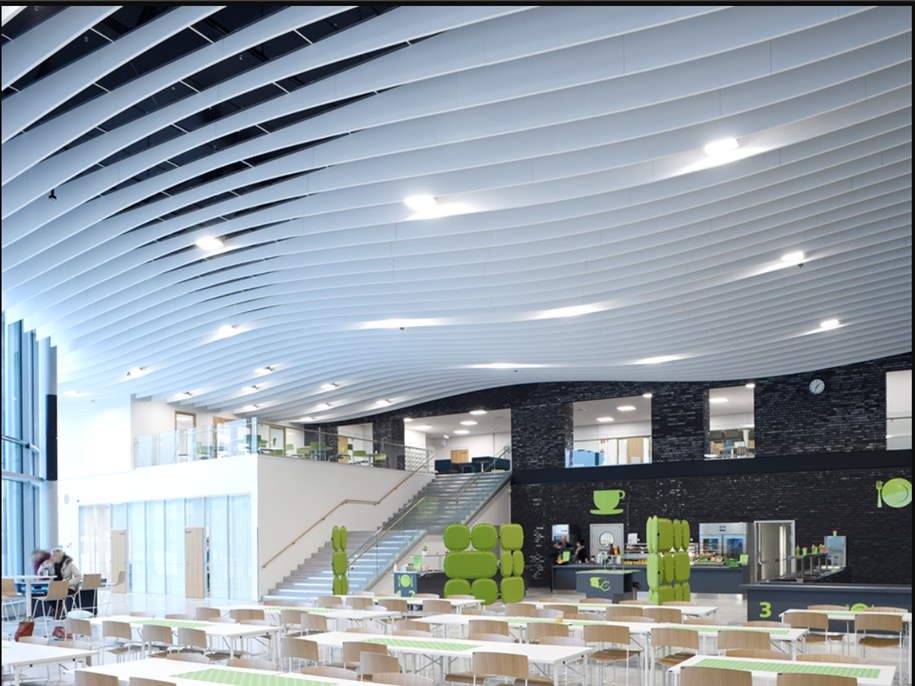
Free-Hanging Acoustic Solutions: The Smart Alternative When Ceilings Aren’t an Option
You walk into a busy restaurant at peak dinner hour. The clattering of dishes, overlapping conversations, and bouncing laughter collide to form a wall of noise that makes normal conversation a chore. Now imagine that same restaurant, but with acoustic panels suspended from the ceiling, transforming that cacophony into a comfortable background ambience. That is the power of free-hanging acoustic solutions.
 Link copied



Traditional wall-to-wall ceiling solutions aren’t always practical or possible, but that doesn’t mean there isn’t a solution to help control sound. Suspended acoustic panels and baffles offer a flexible approach that works around architectural features or meets the specific acoustic needs of a space without requiring the full commitment and expense of a ceiling system.
The Benefits of Free-Hanging Acoustic Solutions
Let’s explore a renovated 1920s building that has been turned into a modern community centre as an example. The beautifully preserved original beams and architectural details tell a story that the community wants to keep alive. Installing a dropped ceiling would essentially box that off and hide the ceiling completely. The answer is to install free-hanging acoustic panels that offer acoustic improvement without sacrificing heritage character.
In addition to preserving existing architecture, free-hanging acoustic solutions like suspended baffles and panels are more targeted than full ceiling systems. This allows the free-hanging units to intercept and absorb sound before it bounces off hard surfaces around a space. These types of acoustic units are also more efficient because both sides of the unit absorb sound waves, in contrast to panels that are installed flat against a surface and only absorb on one side.
Another major advantage of free-hanging solutions is their design flexibility. With multiple shapes, sizes and colour options, these systems can be integrated into the architectural and interior design concept rather than appearing as an afterthought.
When Free-Hanging Panels Make Sense
Free-hanging acoustic panels are especially useful in the following situations:
Historic Buildings and Protected Spaces
Free-hanging solutions protect architectural features while improving acoustics. Their minimal alteration makes them perfect for protected or heritage spaces.
Open-Plan Offices
Exposed ceilings look modern but increase noise. Free-hanging acoustic panels reduce noise, create acoustic zones and improve employee focus without disrupting the open design.
Restaurants and Hospitality
Hard surfaces amplify noise. Suspended acoustic panels break the amplification cycle, creating a more pleasant environment while allowing creative use of colours and shapes to enhance interior aesthetics.
Lobbies, Atriums, and Large Spaces
High ceilings create long reverberation paths. Suspended panels placed at key points reduce noise and improve comfort without blocking natural light or architectural elements.
Types of Free-Hanging Acoustic Treatments
Horizontal Panels (Acoustic Clouds)
Floating clouds of acoustic panels intercept sound waves before they hit harder overhead surfaces, absorbing sound from both sides. These panels are available in multiple shapes such as squares, rectangles, circles and curved forms, allowing flexible layout options.
A wide range of colour choices makes it possible to blend panels discreetly into the ceiling or use them as visual accents.
Vertical Baffles
Vertical baffles expose more absorber surface area, making them ideal for high ceilings or directional noise. They are available in linear and slim profiles, with different lengths and spacing options.
Baffles can be specified in various colours to create rhythm, movement and visual depth while delivering effective acoustic control.
Custom Shapes
High-quality materials allow architects to create custom and design-driven shapes. Solutions such as Ecophon Solo™ Freedom enable bespoke contours, dimensions and layouts while maintaining acoustic performance.
Custom shapes and colour combinations support branding, zoning and architectural expression without compromising sound absorption.
Installation Factors to Consider
Placement Is More Important Than Coverage
Panels should be positioned above key activity areas such as workstations, communal spaces and dining areas. Suspension systems allow panels to hang at various heights, supporting both acoustic performance and visual layering.
Integration with Existing Systems
Panels must coexist with lighting, sprinklers and HVAC systems, but free-hanging solutions typically integrate easily due to their flexible suspension and modular design.
Capabilities of Free-Hanging Solutions
What They CAN Do
- Reduce reverberation
- Improve speech clarity
- Make spaces feel quieter and more comfortable
- Target acoustics exactly where needed
What They CANNOT Do
- Block sound transmission between rooms
- Replace proper sound insulation where privacy is essential
Complementing Other Acoustic Elements
Acoustic performance improves further when combined with other treatments:
- Wall Panels – Effective for horizontal reflections and reducing reverberation
- Soft Furnishings – Break up sound paths and soften reflections
- Rugs / Carpeting – Reduce floor reflections and impact noise
A layered acoustic approach delivers the most balanced results.
Maintenance and Durability
Free-hanging acoustic panels require simple maintenance:
- Regular dusting or vacuuming
- Quality panels resist sagging and fading
- Individual panels are easy to replace
With basic care, these solutions last for many years.
Cost Aspects
Free-hanging acoustic systems may cost more than basic ceiling tiles, but their flexibility, design freedom and performance justify the expense.
In renovation projects, they are often far more cost-effective than installing a full ceiling grid.
Acoustics Are Worth It
Good acoustics aren’t always visible, but they dramatically affect comfort and usability:
- Restaurants become calmer and more enjoyable
- Offices see improvements in focus and employee satisfaction
- Public spaces feel more welcoming and easier to navigate
How to Choose the Right Solution
Start by understanding your space:
- Identify problem areas
- Note architectural features that must remain visible
- Determine key activity zones
- Analyse how the room is used
Then explore free-hanging solutions with suitable shapes, formats and colours that align with both acoustic needs and design intent. For complex projects, working with an acoustic professional can ensure optimal results.
Free-Hanging Acoustics in Action
- Schools & Gymnasiums: Reduced noise and clearer communication
- Hospitals: Calmer patient areas, better waiting rooms, quieter corridors
- Retail Spaces: Pleasant acoustics without blocking lighting or displays
- Public & Cultural Spaces: Better acoustics while preserving architectural beauty
Trends in Free-Hanging Acoustics
Sustainable Materials and Processes
Manufacturers are increasingly using recycled materials, reducing emissions and designing for circularity.
Digital Design Tools
3D modelling and visualisation tools allow clients to preview panel shapes, layouts and colour combinations before installation, improving accuracy and design confidence.
Ready to Start Planning Your Free-Hanging Acoustic Solution?
Free-hanging acoustic solutions are flexible, powerful tools for improving sound in complex environments. With a wide variety of shapes, sizes and colour options, they’re particularly valuable in restaurants, offices, lobbies and spaces where a full ceiling isn’t an option.
If you're ready to make your space more acoustically comfortable, explore free-hanging acoustic solutions from Ecophon, a company with extensive experience helping organisations control sound effectively.
FAQs
How much acoustic treatment do I need?
Most spaces benefit from 15–25% ceiling area coverage. Hard-surface rooms may require more.
Do suspended panels work in low ceilings?
Yes, they can be installed close to the ceiling while still improving acoustics.
Do free-hanging panels require special maintenance?
No. Regular dusting or vacuuming is usually sufficient.
How long do acoustic panels last?
With good care, quality panels last many years.
Can installation be done DIY?
Simple setups can be DIY; complex layouts should be professionally installed.