
Modern Luxury Ceiling Design: Where Acoustics Meets High-End Interiors
Modern luxury interiors are defined as much by restraint as by ornamentation. A genuinely high-end ceiling today is less likely to be heavily decorated than it is to be quietly, precisely executed: a seamless plane, a sculptural gesture, or a deliberately dramatic dark surface, each chosen with intent rather than defaulted to because it was the easiest option available.
 Link copied


The Seamless Ceiling as a Modern Luxury Signal
Few finishes signal considered, high-end design as clearly as a ceiling with no visible seams, grid lines or tile edges. Ecophon Fade ONE Smooth achieves exactly this, a spray-applied acoustic plaster with an ultra-smooth finish, allowing a large ceiling area to read as a single continuous architectural plane while still delivering genuine sound absorption. This makes it a natural fit for boardrooms, private dining spaces and residential-style luxury interiors where visible modularity would undercut the intended atmosphere.
Sculptural Ceilings as a Statement of Craft
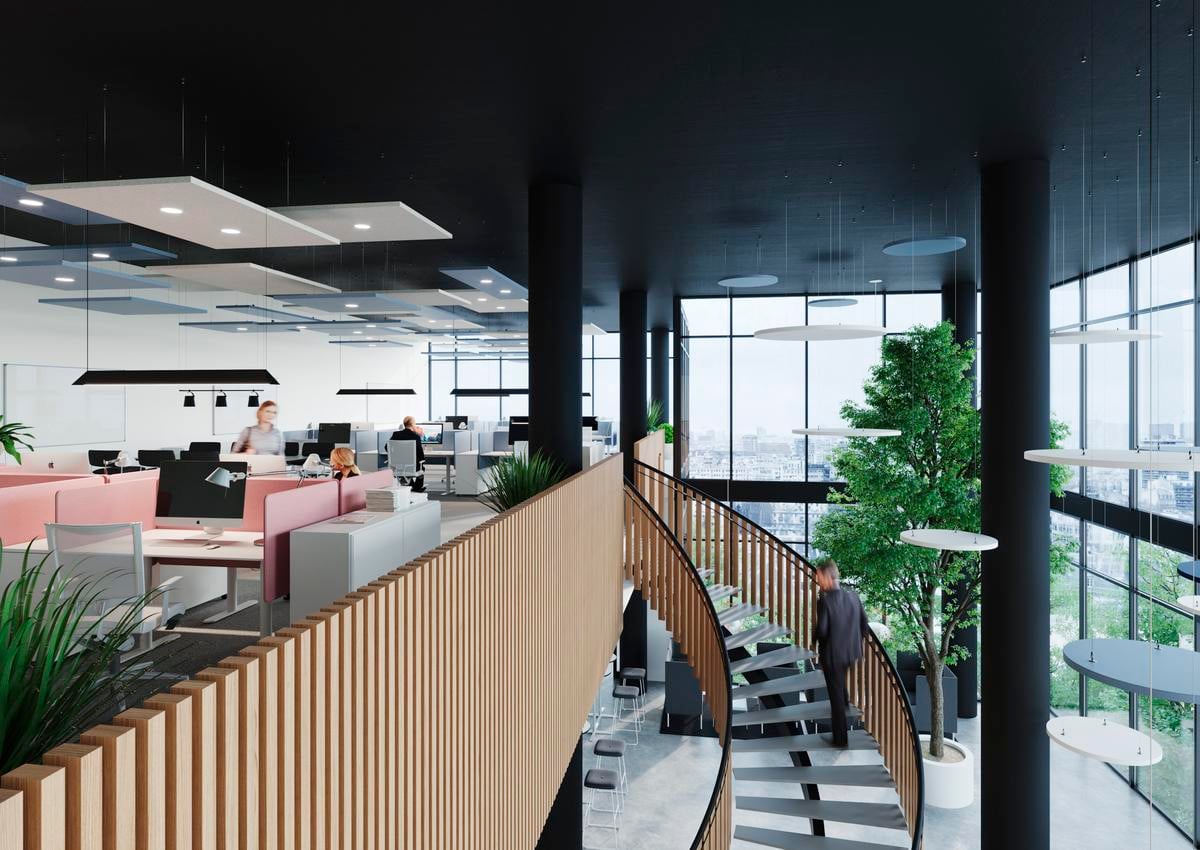
Where a flat, seamless surface is not the right answer, a sculptural free-hanging ceiling offers a different kind of luxury signal: visible craft and customisation. Through Solo Freedom, Ecophon Solo panels can be manufactured in fully bespoke shapes, allowing a ceiling to become a genuinely one-off design element rather than a specified product chosen from a standard catalogue.
Dark, Dramatic Ceilings
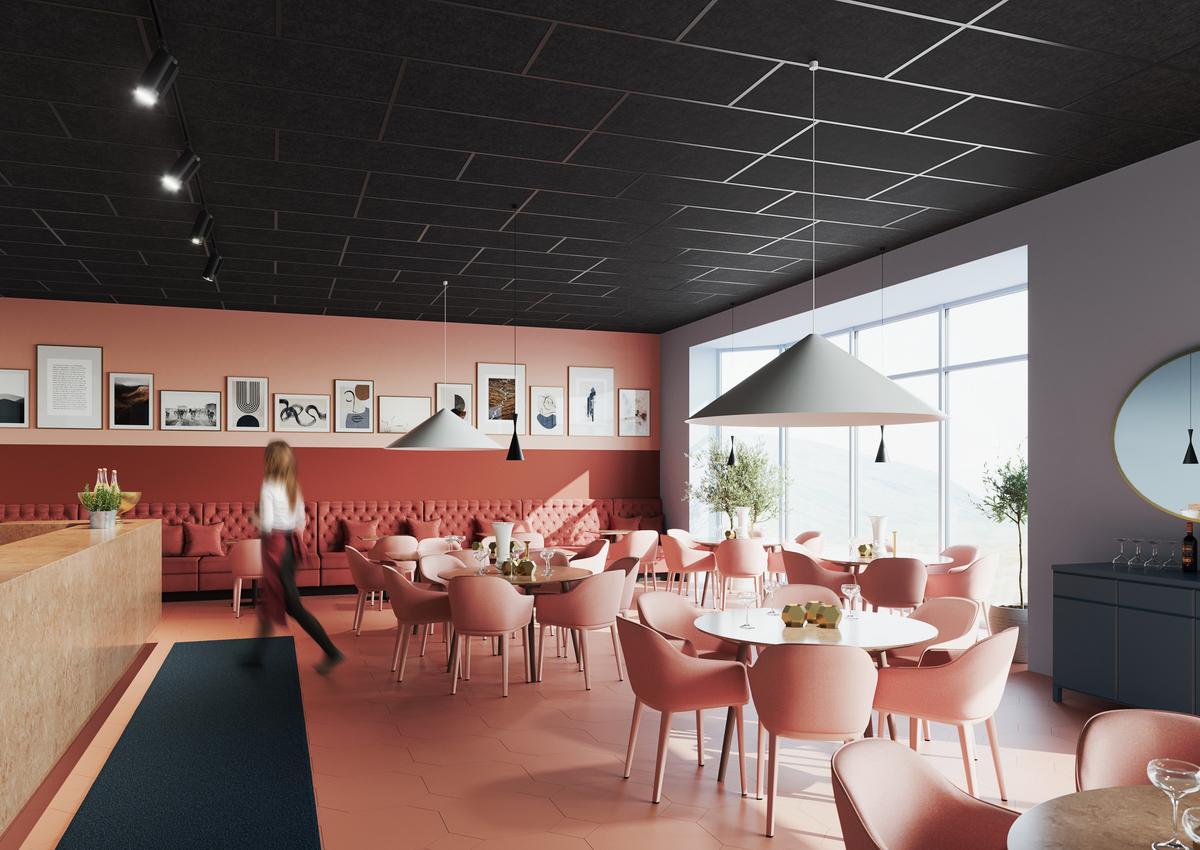
Modern luxury design has also rehabilitated the dark ceiling, once considered a compromise, now increasingly chosen deliberately. Ecophon Sombra's matte black finish is specifically built for this kind of application, controlling sound in social and hospitality venues while contributing to the intimate, dramatic atmosphere that a bright white ceiling simply cannot create.
What Separates Luxury Ceiling Design From Standard Specification
- Deliberate, considered material choice rather than a default, budget-led decision
- Visual continuity between ceiling, wall and lighting design, rather than three separately specified elements
- Acoustic performance treated as a baseline requirement, not a trade-off against appearance
- A willingness to specify custom or bespoke elements where a standard product would compromise the design intent
Balancing Luxury Aesthetics With Acoustic Performance
The most common mistake in high-end ceiling design is treating acoustic performance and visual ambition as competing priorities, when a well-specified product can deliver both simultaneously. A seamless plaster ceiling that looks architecturally minimal can still carry a genuine Class A absorption rating, and a dramatic dark ceiling can still meet the acoustic brief of a busy restaurant, provided the correct product is specified from the outset rather than chosen on appearance alone.
Where Modern Luxury Ceiling Design Is Heading
As more architects and interior designers become aware of what seamless plaster, sculptural free-hanging systems and dark acoustic finishes can achieve together, luxury ceiling design is increasingly moving away from a single dominant finish per project, towards a considered mix of these approaches across different zones of the same high-end interior.
The Role of Acoustic Consultants in Luxury Ceiling Projects
High-end ceiling design projects increasingly involve a dedicated acoustic consultant working alongside the architect and interior designer from an early stage, rather than acoustics being addressed as a compliance check late in the process. This is particularly important where a seamless or sculptural ceiling is being specified, since these systems often require more careful acoustic modelling than a standard flat grid to confirm they will meet the room's performance target.
An acoustic consultant can also help resolve tension between design ambition and acoustic requirement before it becomes a costly late-stage compromise, for example confirming how much of a ceiling genuinely needs to be treated to hit a target reverberation time, which then informs how much creative freedom remains for a sculptural or seamless feature elsewhere in the same room. Involving this expertise early, rather than after a design has already been finalised, consistently produces better outcomes on ambitious luxury projects.
Modern luxury ceiling design succeeds when acoustic performance and visual ambition are planned together from the very start of a project, rather than treated as competing priorities to be traded off against one another. Whether the chosen direction is a seamless plaster plane, a bespoke sculptural installation, or a dramatic dark finish, the strongest results come from specifying with the same rigour applied to any other high-end material in the building, informed by both the room's acoustic brief and the architectural story the space is trying to tell.
Related Reading on Ecophon.com
- Ecophon Fade ONE Smooth acoustic plaster
- Ecophon Solo Freedom (custom shapes)
- Ecophon Sombra A system
- Black acoustic ceiling solutions
Frequently Asked Questions
Is a seamless plaster ceiling more expensive to maintain than a standard tiled ceiling?
Maintenance requirements differ rather than being simply higher or lower. A seamless finish does not allow individual tile replacement in the way a grid system does, so repairs typically involve re-finishing a section, which is a different process to swapping out a single damaged tile.
Can custom-shaped free-hanging panels be manufactured to match an architect's specific design?
Yes, this is precisely what bespoke free-hanging ranges such as Solo Freedom are designed for, manufacturing panels to a custom shape and colour specification provided by the architect or designer.
Do dark ceilings make a room feel smaller?
A dark ceiling can make a room feel more intimate and lower, which is often the intended effect in social and hospitality venues. In taller spaces with adequate lighting design, this effect is generally experienced as dramatic and considered rather than cramped.
Is it possible to update a luxury ceiling design later without a full renovation?
This depends on the system chosen. Free-hanging installations can often be reconfigured or partially replaced with relative ease, while a seamless plaster ceiling typically requires more substantial rework to change materially, which is worth considering at the specification stage if future flexibility is a priority.