




Buildings are also a major contributor to the country's energy use and emissions: industry estimates put the building and construction sector's share of India's total energy consumption and carbon emissions at 35 to 40%. Source: DWF Group, Construction Insights India (2023).
On certification, India ranked third globally for LEED-certified building area in 2023 (source: GBCI, 2023), and the Indian Green Building Council has since set a target of 10 billion square feet of certified green building footprint over the next decade (source: Business Standard, Oct 2024), a marker of how quickly the certified footprint is expected to grow from its 2023 base of a little over 4.5 billion square feet across all rating systems.
In this environment, every material category used in buildings faces the same question: how does it perform against the principles of circularity? Acoustic ceiling panels, which cover substantial surface areas in commercial buildings, have often been treated as afterthoughts in the sustainability conversation. That is changing.
Why Acoustic Ceiling Panels Deserve a Spot in the Sustainability Conversation
A medium-sized office with 5,000 square feet of open floor plan may have the majority of that area covered by acoustic ceiling panels. A hospital ward, a school building, a corporate campus, these spaces use acoustic materials at scale. The embodied carbon, manufacturing energy demands, end-of-life disposal implications, and indoor air quality effects of those ceiling systems matter.
The category of sustainable acoustic ceiling panels has moved forward significantly. Recycled content cores, low-emission surfaces, and take-back recycling programmes are now available from manufacturers who have invested seriously in this direction. Not all products marketed as sustainable actually deliver on the full circular promise, which makes it worth understanding what genuine circularity looks like in this category.
What Circular Means for Acoustic Ceiling Panels
- Input materials: Virgin mineral fibre? Recycled glass wool? Bio-based fibres? The input material determines embodied carbon and the claim to renewable or recovered resources.
- Manufacturing: What energy source powers the production? Are waste materials recaptured and reused?
- Indoor air quality impact: Does the panel off-gas volatile organic compounds that affect building occupants?
- End-of-life pathway: Can the panel be disassembled? Does the manufacturer offer a take-back or recycling programme?
A product that scores well across all four questions is genuinely circular. A product that claims sustainability based on only one is only partially there.
Ecophon's Approach to Sustainable Acoustic Ceiling Panels
Ecophon Advantage™ E, Ecophon Opta™ E, and Ecophon Sombra™ are all built on a glass wool core made predominantly from recycled glass. The manufacturing process uses a significant proportion of recycled cullet, reducing both the energy input and the raw material demand compared to producing glass from virgin silica.
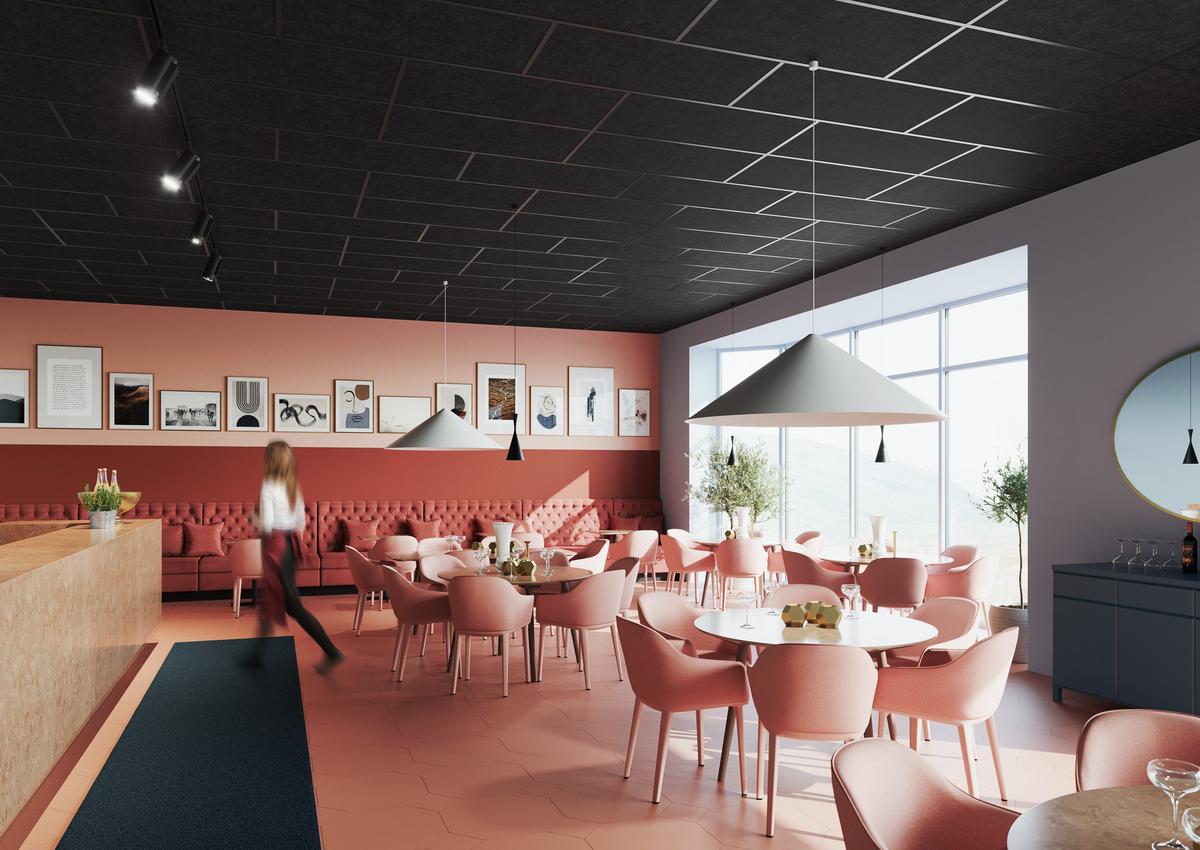
Ecophon Sombra™ is the decorative acoustic ceiling panel designed for cinemas, restaurants, retail spaces, and commercial interiors where acoustic performance and visual design need to work together. Sombra's patterned surface texture gives it a distinctive appearance while the glass wool core delivers the same Class A absorption as the rest of the Ecophon India range. For projects seeking IGBC, GRIHA, or LEED India certification, Sombra alongside Advantage™ E and Opta™ E can contribute to Materials and Resources credits for recycled content and Indoor Environmental Quality credits for acoustic comfort.
What Sustainable Acoustic Panels Mean for Indian Green Building Certifications
- Materials and Resources: Panels with documented recycled content and Environmental Product Declarations can qualify for recycled content credits under LEED v4, IGBC, and GRIHA.
- Indoor Environmental Quality: LEED v4 and the WELL Building Standard include acoustic performance criteria. Class A panels support these credits.
- Indoor Air Quality: Materials must meet low-VOC emission standards; check current product documentation for the specific certifications held for each panel range.
For documentation supporting certification credit categories, Ecophon's Declarations of Performance and wider sustainability commitments provide the Environmental Product Declarations and technical documentation project teams need for certification submissions.
Related Reading on Ecophon.com
- Ecophon sustainability
- Declarations of Performance
- Ecophon Sombra product range
- Ecophon Advantage product range
- Ecophon Opta product range
- Download Ecophon brochures
Frequently Asked Questions
Do sustainable acoustic ceiling panels perform as well as conventional ones?
Yes. Ecophon Advantage™ E, Opta™ E, and Sombra™ all carry Class A sound absorption ratings. The recycled glass wool core delivers acoustic performance that matches or exceeds products made from virgin materials.
How do Ecophon acoustic ceiling panels contribute to LEED or IGBC certification in India?
Ecophon panels with recycled content and Environmental Product Declarations can contribute to Materials and Resources credits and Indoor Environmental Quality credits in both LEED v4 and IGBC. High-absorption systems support credit categories recognising acoustic comfort as part of a healthy indoor environment.
What is the biggest sustainability gap in acoustic ceiling panels currently?
End-of-life management. Most acoustic ceiling systems in India go to landfill at refurbishment or demolition, consistent with the country's broader construction and demolition waste recycling rate of roughly 1%. Confirm with Ecophon's current sustainability documentation what take-back or recycling options are available for used panels.
What is Ecophon Sombra and when should it be specified?
Ecophon Sombra™ is Ecophon's decorative acoustic ceiling panel, designed for cinemas, restaurants, retail environments, and commercial lobbies where visual design and acoustic performance need to work together. It carries Class A sound absorption on a recycled glass wool core, making it a sustainable choice for green-certified projects with strong design requirements.