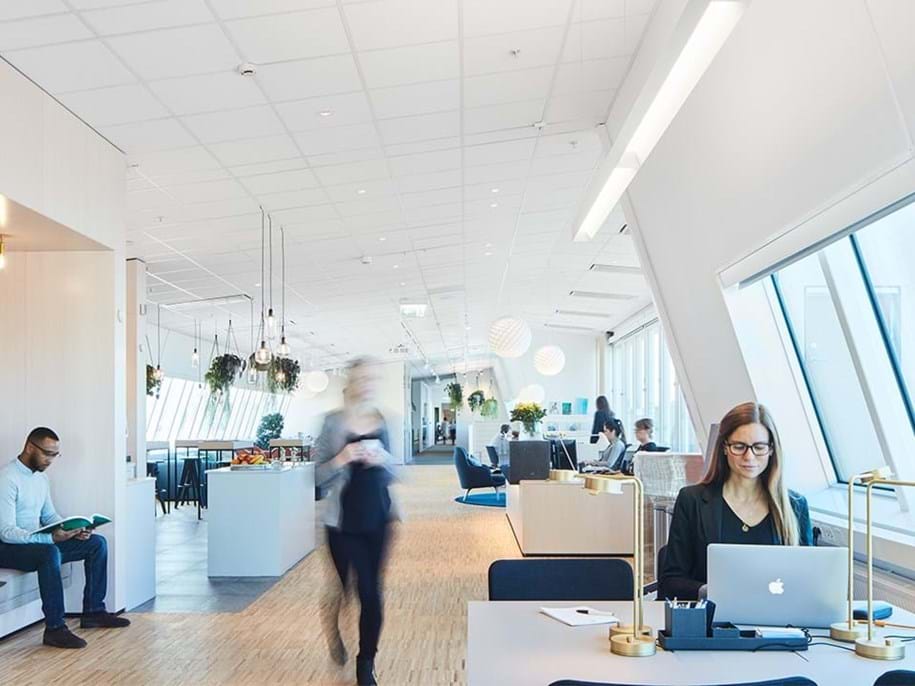
The Science of Acoustics: How Sound Affects Productivity in Workspaces
Sound shapes every aspect of our working lives, yet most organizations overlook its profound impact on employee performance. The relationship between acoustics and productivity runs deeper than simple noise complaints; it affects cognitive function, stress levels, and overall workplace satisfaction. By exploring acoustic solutions for offices and understanding workplace sound environment fundamentals can transform how businesses approach office design and employee well-being.
The Hidden Impact of Poor Office Acoustics
Open-plan offices dominate modern workplace design, but they create open plan acoustics challenges that directly impact employee performance. Research reveals that 60% of office workers struggle to concentrate due to acoustic distractions, with only 8% working in truly quiet environments.
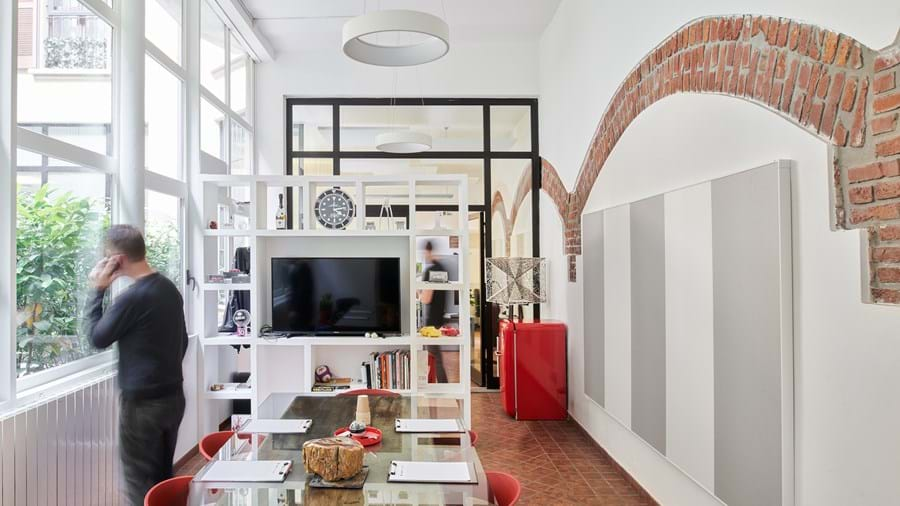
The financial implications are staggering. When employees cannot focus, productivity plummets, error rates increase, and stress levels soar. Studies demonstrate that increased human errors from noise exposure lead to more work-related accidents and decreased productivity overall.
What Makes Workplace Noise So Disruptive?
The most problematic sounds in office environments aren't necessarily the loudest ones. Colleagues talking to each other disrupts 38% of workers, while phone conversations affect 34%. These conversational sounds capture our attention because our brains are wired to process speech, making it nearly impossible to filter out.
Here's why certain sounds derail productivity:
- Speech interference: Human conversation triggers automatic attention responses
- Intermittent noise: Unpredictable sounds create more stress than constant background noise
- High-frequency sounds: Sharp, piercing noises penetrate concentration barriers
- Emotional content: Laughter, arguments, or excited conversations draw focus away from tasks
The Science Behind Acoustics and Productivity
Understanding the science behind acoustics and productivity is essential for designing workplaces that truly support focus, well-being, and efficiency. Implementing effective acoustic solutions for offices can reduce distractions, lower stress, and enhance employee performance by aligning the office sound environment with human cognitive needs.
Cognitive Load and Attention
Our brains have limited processing capacity. Poor acoustic environments force employees to work harder to maintain concentration, increasing cognitive load and mental fatigue. This extra effort leaves less mental energy for actual work tasks.
Research shows that environmental noise causes stress and loss of concentration, contributing to workplace dissatisfaction and increased conflicts. When people struggle to hear clearly, communication breaks down, leading to misunderstandings and project delays.
Stress Response and Physical Health
Chronic noise exposure triggers the body's stress response system. Elevated cortisol levels from constant acoustic disruption can lead to:
- Increased blood pressure
- Disrupted sleep patterns
- Weakened immune system response
- Higher rates of burnout and turnover
Memory and Learning Impact
Sound directly affects how we process and retain information. In noisy environments, working memory becomes compromised, making it harder to:
- Follow complex instructions
- Remember important details
- Learn new skills or procedures
- Make accurate decisions under pressure
Designing Optimal Sound in Workplace Design
Creating acoustic comfort in offices requires understanding how sound behaves in different spaces. The ideal acoustic environment balances audio input so people hear the sounds they want while other sounds are filtered out.
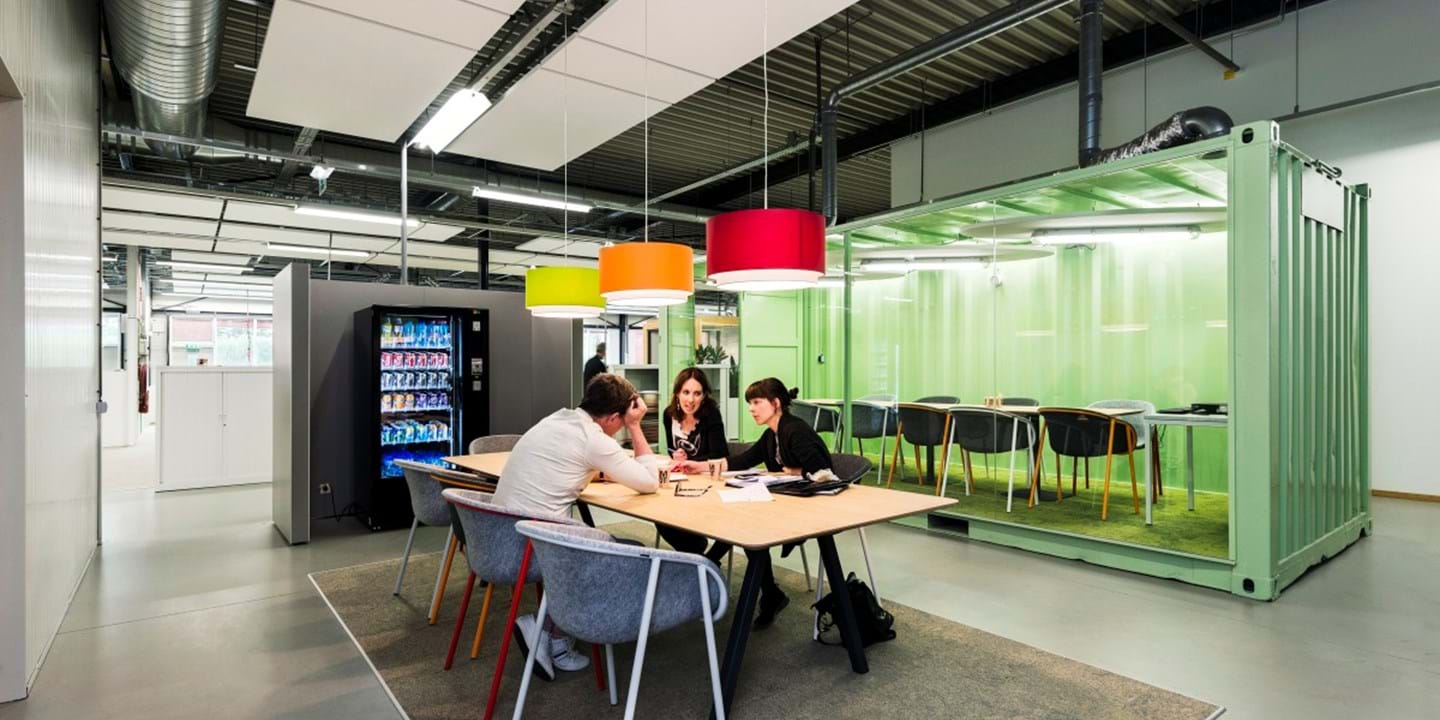
Absorption vs. Reflection Strategy
Smart acoustic design uses both sound absorption and strategic reflection:
Sound Absorption Areas:
- Meeting rooms and collaboration spaces
- Open work areas prone to echo
- Break rooms and social zones
- Phone booth areas
Sound Reflection Zones:
- Presentation areas where speakers need amplification
- Conference rooms requiring even sound distribution
- Training spaces with multiple participants
Zoning for Different Work Activities
Different tasks require different acoustic environments:
Focus Work Zones:
- Lower ambient noise levels (35-45 dB)
- Minimal speech interference
- Consistent background sound masking
Collaboration Areas:
- Moderate noise tolerance (45-55 dB)
- Clear speech transmission
- Controlled reverberation times
Social Spaces:
- Higher noise tolerance (55-65 dB)
- Energizing atmosphere
- Flexible acoustic properties
Office Acoustics Solutions That Work
Ceiling Systems for Sound Control
Acoustic ceiling systems serve as the primary defense against noise pollution in open offices. Modern ceiling solutions can reduce reverberation times by up to 80%, dramatically improving speech clarity and reducing background noise buildup.
Key features of effective ceiling acoustics:
- High noise reduction coefficients (NRC 0.9 or higher)
- Easy maintenance and cleaning capabilities
- Integration with lighting and HVAC systems
- Aesthetic flexibility to match design vision
Wall-Mounted Sound Solutions
Wall absorbers complement ceiling systems by tackling sound reflections at the source. Strategic placement of acoustic wall panels can:
- Reduce echo in meeting rooms
- Create quiet zones within open spaces
- Improve privacy between workstations
- Enhance overall acoustic comfort
Space Planning for Acoustic Success
The most expensive sound treatments cannot compensate for poor space planning. Consider these layout strategies:
- Buffer Zones: Place quieter activities between noisy areas and focus work spaces. Storage areas, copy centers, and corridors can serve as natural sound barriers.
- Height Variations: Use furniture, planters, and architectural elements to break up sound transmission paths without completely closing off spaces.
- Material Selection: Choose furnishings and finishes that support acoustic goals. Soft seating, fabric panels, and carpeting all contribute to sound absorption.
Measuring the Impact of Noise on Employees
 Quantifying Productivity Loss
Organizations can measure acoustic impact through several metrics:
- Task completion time: Monitor how long routine tasks take in different noise conditions
- Error rates: Track mistakes and rework requirements
- Employee surveys: Regular feedback on acoustic satisfaction and concentration ability
- Absenteeism patterns: Higher sick days often correlate with stressful acoustic environments
Setting Acoustic Performance Standards
Establish measurable targets for your workplace sound environment:
- Reverberation time: 0.6-0.8 seconds for open offices
- Speech privacy: 80% intelligibility within 15 feet, 20% beyond workstation boundaries
- Background noise levels: 42-48 dB for focused work areas
- Sound masking: Consistent 45-48 dB when needed for privacy
How Ecophon Supports Workplace Acoustic Excellence
Ecophon develops, manufactures and markets acoustic panels, baffles and ceiling systems that contribute to a good working environment by enhancing peoples' wellbeing and performance. Their comprehensive approach to workplace acoustics addresses the complex relationship between sound and productivity.
The company's product range tackles acoustic challenges at multiple levels. Ecophon Akusto™ wall panels complement acoustic ceilings, solving acoustic challenges while following current design and installation trends. This integrated approach ensures that both horizontal and vertical surfaces work together to create optimal acoustic environments.
Their framed wall panel systems and wall absorbers reduce echoes, eliminate unnecessary sound reflections, and enhance speech clarity, making it easier for employees to communicate effectively while maintaining focus on individual tasks.
What sets Ecophon apart is their focus on real-world performance. Their most popular products are now available with a reduced carbon footprint, showing commitment to both acoustic performance and environmental responsibility. This dual focus helps organizations meet both productivity and sustainability goals.
Implementation Strategies for Better Workplace Acoustics
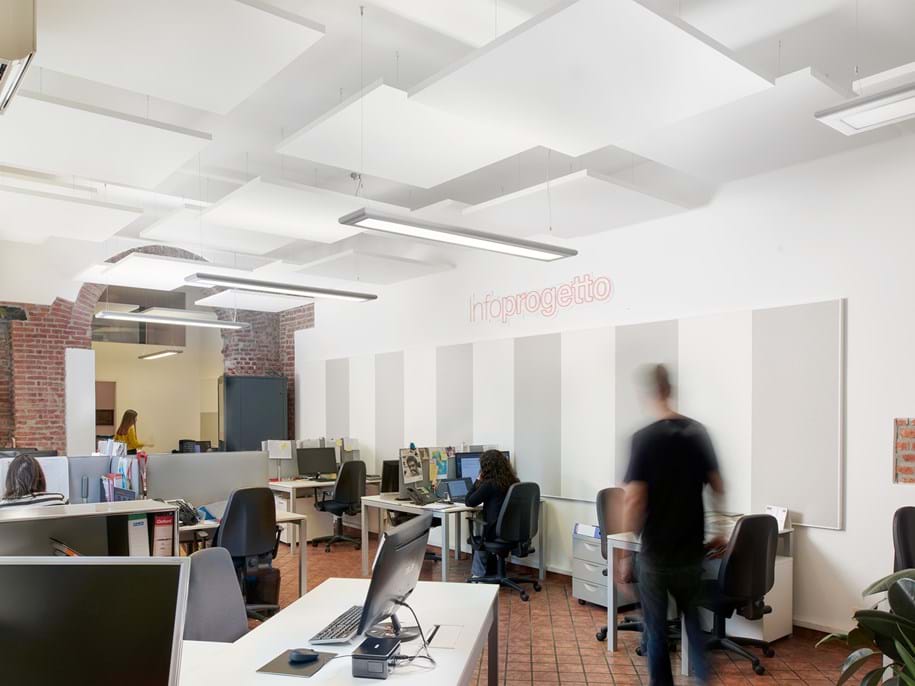
Phased Approach to Acoustic Improvement
Organizations don't need to overhaul entire offices overnight. A strategic, phased approach delivers better results:
Phase 1: Assessment and Quick Wins
- Conduct acoustic measurements
- Add soft furnishings and plants
- Rearrange noisy equipment away from quiet zones
- Implement basic etiquette guidelines
Phase 2: Targeted Interventions
- Install acoustic panels in high-priority areas
- Create dedicated phone zones
- Add sound masking where appropriate
- Upgrade ceiling systems in critical spaces
Phase 3: Comprehensive Solutions
- Implement integrated ceiling and wall systems
- Design acoustic zoning throughout the facility
- Train staff on acoustic awareness
- Establish ongoing monitoring procedures
Change Management for Acoustic Improvements
Employee buy-in is essential for acoustic solutions to succeed:
- Education: Help staff understand how improved acoustics benefit their work experience
- Participation: Include employees in identifying problem areas and solution preferences
- Communication: Keep teams informed about planned improvements and timelines
- Feedback: Create channels for ongoing acoustic performance feedback
The Future of Workplace Acoustics

Technology Integration
Smart building systems increasingly incorporate acoustic monitoring and control. Future workplace designs will feature:
- Dynamic sound masking: Automated systems that adjust based on occupancy and activity
- Acoustic sensors: Real-time monitoring of noise levels and speech privacy
- AI-powered optimization: Machine learning algorithms that optimize acoustic performance
- Personal sound control: Individual workstation acoustic adjustments
Hybrid Work Considerations
The rise of hybrid work models creates new acoustic challenges and opportunities:
- Video call acoustics: Spaces optimized for virtual meeting participation
- Flexible acoustic zones: Areas that adapt based on daily occupancy patterns
- Home office acoustic guidance: Resources to help remote workers create better sound environments
- Acoustic equity: Ensuring all workers have access to good acoustic conditions regardless of work location
Wellness Integration
Future acoustic design will increasingly connect to broader wellness initiatives:
- Biophilic acoustics: Natural sounds and acoustic materials that connect to nature
- Circadian sound design: Acoustic environments that support natural energy rhythms
- Stress reduction protocols: Sound environments specifically designed to lower cortisol levels
- Cognitive enhancement: Acoustic conditions optimized for different types of thinking and creativity
Taking Action: Your Next Steps
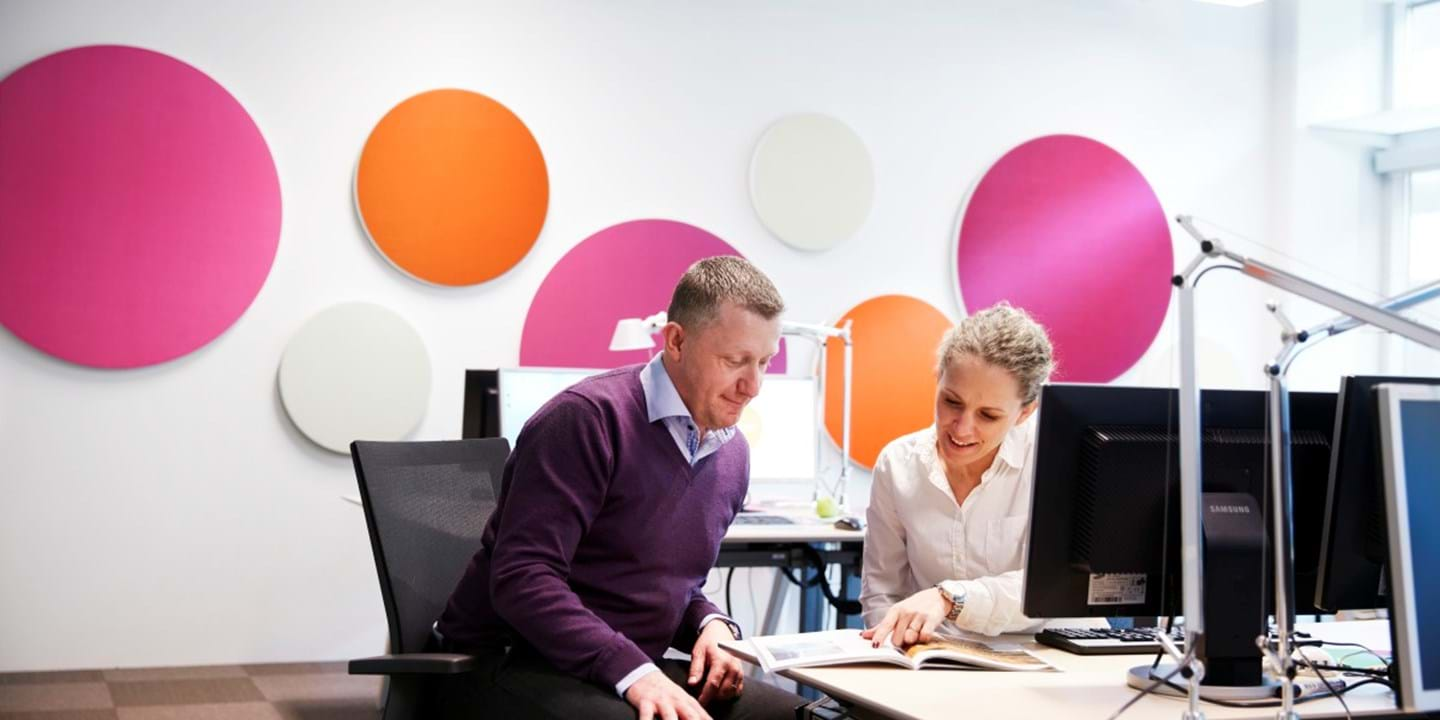
Creating better workplace acoustics requires commitment from leadership, input from employees, and partnership with experienced acoustic professionals. Start by conducting an honest assessment of your current acoustic environment and its impact on your team's productivity and well-being.
Consider working with specialists who understand the complex relationship between sound, space, and human performance. The right acoustic partner can help you develop solutions that enhance both productivity and employee satisfaction while staying within budget constraints.
Ready to transform your workplace acoustic environment? Connect with Ecophon's acoustic specialists to explore ceiling systems, wall absorbers, and integrated solutions designed to enhance employee wellbeing and performance. Their expertise in workplace sound design can help you create an environment where your team truly thrives.
Frequently Asked Questions
What is the ideal noise level for office productivity?
Research indicates that 42-48 dB is optimal for focused work, similar to a quiet library. This level allows concentration while permitting necessary communication and collaboration activities.
How do acoustic ceiling tiles improve workplace productivity?
Acoustic ceiling systems reduce reverberation and echo, making speech clearer and reducing background noise buildup. This helps employees concentrate better and communicate more effectively throughout the workday.
Which office sounds are most disruptive to employee focus?
Conversational speech between colleagues disrupts 38% of workers, followed by phone conversations at 34%. These sounds capture attention because our brains naturally process human speech patterns.
Can poor office acoustics cause health problems?
Yes, chronic noise exposure increases stress hormones, elevates blood pressure, disrupts sleep patterns, and weakens immune system response. Poor acoustics contribute to higher burnout rates and employee turnover.
How quickly do acoustic improvements show productivity benefits?
Most organizations see immediate improvements in employee satisfaction and concentration within days of acoustic interventions. Measurable productivity gains typically become evident within 2-4 weeks of implementation.
References
-
Canada Safety Council. (n.d.). Office noise and acoustics. Retrieved from https://canadasafetycouncil.org/office-noise-and-acoustics/
-
Bhandari, N., & Sharma, S. (2024). Role of background noise and students' noise sensitivity. ScienceDirect. Retrieved from https://www.sciencedirect.com/science/article/abs/pii/S0360132323011587
-
Steelcase. (n.d.). Too much noise. Retrieved from https://www.steelcase.com/eu-en/research/articles/topics/privacy/much-noise/
 Link copied