
Why Hotels Are Choosing Suspended Ceiling Systems for Modern Interiors
When guests walk into a hotel lobby, they notice the lighting, the furniture, and the atmosphere. Few look up. Yet the ceiling above them does more work than almost any other surface in the room. It controls sound, conceals infrastructure, regulates temperature, and sets the visual tone for the entire space. That is exactly why suspended ceiling systems have become a go-to choice for hotel architects and interior designers across India and beyond.
Let's break it down.
 Link copied



What Is a Suspended Ceiling System?
A suspended ceiling, also called a drop ceiling or false ceiling, is a secondary ceiling layer installed below the main structural slab. It hangs from a metal grid framework, creating a gap between the two layers. That gap is where the real work happens.
Suspended ceilings are secondary ceilings installed beneath the structural slab, often used to conceal HVAC ducts, lighting, wiring, and sprinklers. They also offer designers greater control over noise reduction, access, and layout flexibility.
For hotels, which must manage aesthetics, guest comfort, safety compliance, and operational costs all at once, this makes the suspended ceiling one of the most practical design decisions available.
The Noise Problem Hotels Cannot Ignore
Here is a stat worth knowing if you are in the hospitality business: over 60% of hotel guests have reported disrupted sleep due to excessive hotel room noise, directly affecting guest satisfaction, health, and overall experience.
That is not just a comfort issue. It is a reputation issue. Industry surveys show that 86% of travelers are less likely to recommend a hotel after a bad noise experience. And those guests rarely complain at the front desk. Guests rarely notify the front desk in real-time, opting instead to express their dissatisfaction in post-stay reviews.
The damage shows up weeks later in one-star reviews.
Suspended ceilings can be equipped with acoustic materials and designs that help absorb and reduce noise, creating a more peaceful and enjoyable atmosphere. By minimising noise reverberation and enhancing speech clarity, suspended ceilings contribute to a relaxed and intimate setting.
This is one of the primary reasons hotel developers and refurbishment teams now specify acoustic ceiling solutions from the earliest stage of planning rather than treating them as an afterthought.
How Acoustic Ceiling Solutions Work in Hotel Spaces
Different hotel areas have different acoustic needs. Here is how suspended ceiling systems address each one.
Guest Rooms: Sleep Quality Matters

In guest rooms, the goal is simple: block sound from hallways, adjacent rooms, and HVAC equipment. Sound insulating ceiling tiles create the perfect 'soundproof' suspended ceiling. This type of panel combats sound attenuation, reducing room-to-room noise transfer.
Some ceiling systems also incorporate sound masking technology. Some advanced ceiling systems also integrate sound masking technology to enhance privacy in shared business environments.
Hotel Lobbies: Balancing Energy and Calm

A lobby needs to feel alive, but it should not feel chaotic. While some energy and liveliness is desired, uncontrolled reverberation can overwhelm guests. Acoustic ceiling treatments like baffles or clouds absorb unwanted reflections, while laminated glass partitions reduce noise transfer between zones.
Restaurants and Dining Areas

Hotel dining spaces are notoriously loud. Hard surfaces, open layouts, and high ceilings all amplify sound. Acoustic baffles are suspended panels that help reduce sound reverberation in large spaces. They are particularly useful in open-plan areas like hotel lobbies, dining areas, and event spaces, where sound can bounce off hard surfaces and create noise disturbances.
Conference and Event Spaces

Business travelers expect to hear and be heard clearly. Acoustic ceiling panels reduce background noise and improve communication clarity in high-traffic areas. For conference rooms and ballrooms, ceiling-level acoustic treatment is one of the most effective ways to make speech intelligible without changing the room's layout.
Beyond Sound: The Practical Advantages of Suspended Ceiling Systems
Sound control is compelling on its own. But suspended ceilings offer several other benefits that matter greatly to hotel operations teams.

Concealing Infrastructure Without Sacrificing Access
Hotels run on HVAC systems, electrical networks, fire suppression lines, and data cables. None of it looks good. The plenum area above suspended ceilings neatly conceals electrical wiring, plumbing, and HVAC ductwork. Ceiling tiles can be easily removed as needed for maintenance access without major demolition.
This is a practical advantage that hotel facility managers appreciate. Removable ceiling tiles and access panels allow for easy inspection and adjustment of equipment, ensuring minimal disruptions to operations and guest experiences.
Energy Performance
Heating and cooling a hotel is expensive. Suspended ceilings reduce the volume of air that needs to be temperature-controlled in each room. HVAC systems also operate more efficiently, since the unwanted heat transfer across the ceiling is reduced.
Over time, that adds up to lower operating costs, particularly important for large hotel properties.
Fire Safety and Compliance
Many suspended ceiling tiles and grids feature fire-resistant materials like mineral fiber and metal in their construction. These materials significantly inhibit fire spread in the event of a blaze.
For hotels operating under local fire safety codes and building regulations, this is not optional. It is a baseline requirement, and suspended systems are engineered to meet it.
Flexibility for Renovations
Hotels refresh their interiors regularly to stay competitive. Suspended ceilings make that easier. Should you notice a faulty tile, this can be individually removed from the grid without removing the entire ceiling. This makes repairs and replacements quicker and less expensive when compared to alternative options such as drywall ceilings.
When a section needs updating, individual panels come out and go back in. There is no need to close an entire floor.
Design Versatility: Matching Any Hotel Style
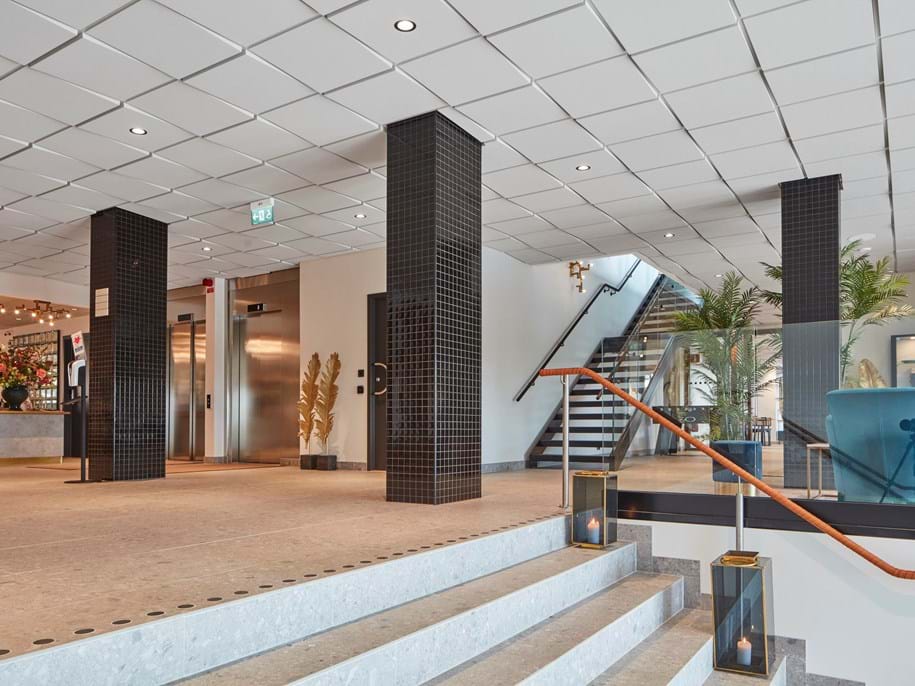
Not all hotels look the same, and suspended ceiling systems do not have to either.
From sleek and modern designs to intricate patterns or textured finishes, suspended ceilings can be customised to match the desired theme or ambiance of the establishment. Whether it's a contemporary hotel lounge or a cosy restaurant setting, suspended ceilings can be tailored to reflect the brand identity and create a lasting impression on guests.
Lighting integration is another area where the ceiling becomes a design asset. Recessed lights, pendant fixtures, or LED strips can be incorporated into the ceiling design to provide ambient, task, or accent lighting. Properly positioned and well-designed lighting enhances the overall ambiance, highlights architectural features, and sets the mood for a memorable dining or hospitality experience.
Various materials are used to construct these ceiling systems, including mineral fiber, metal, wood, fiberglass, or PVC. These panels are often integrated with lighting fixtures and access panels for maintenance.
This range of materials means architects are not locked into one look. A boutique hotel can choose wood-effect panels for warmth. A business hotel can go with clean white mineral fiber tiles. A luxury property can use integrated lighting with seamless grid lines.
What to Look for in a Hotel Ceiling Solution

Not every ceiling product performs the same. Here are the technical factors that matter most in a hotel environment.
- Sound Absorption (αw rating): Higher values mean better acoustic performance. Look for panels rated 0.80 or above for spaces like lobbies and conference rooms.
- Sound Attenuation (Rw rating): This measures how well the ceiling blocks sound from transferring between floors or rooms.
- Humidity Resistance: Spa areas, kitchens, and bathrooms need panels that resist moisture without sagging.
- Fire Classification: Panels should meet the fire ratings required by local building codes.
- Cleanability: High-touch areas need surfaces that can be wiped down without degrading.
- Integration: Check that the grid system can accept the lighting, HVAC diffusers, and fire sprinkler heads already in the spec.
When specifying suspended ceiling systems, it's important to consider factors such as load-bearing capacity, ease of integration with lighting and HVAC components, and compliance with local building codes and standards.
Why Ecophon Is a Reference Point for Hospitality Ceiling Solutions
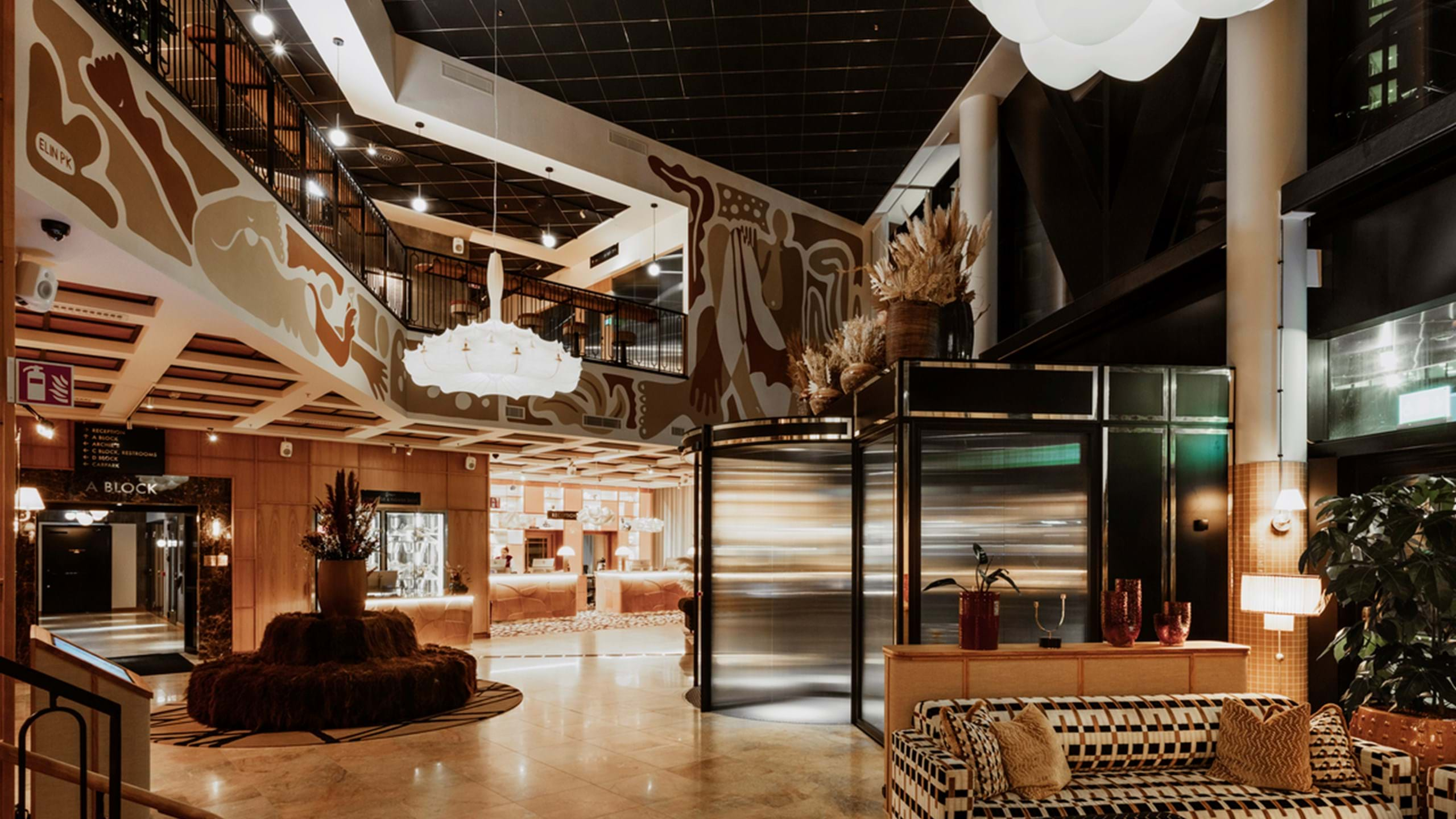
Ecophon (ecophon.com/in) builds acoustic ceiling and wall solutions specifically designed around how people experience spaces. Their product range includes ceiling tiles, free-hanging acoustic islands, baffles, wall panels, and integrated ceiling grids, all developed with sound comfort as the foundation.
What sets Ecophon apart is the connection between product design and acoustic science. Their ceiling panels are engineered to absorb sound across the frequencies most relevant to human speech and comfort, not just to hit a number on a spec sheet.
For hotel architects and developers working on projects where sound quality directly affects guest ratings, Ecophon's range of ceiling solutions covers everything from standard grid-based tiles to custom-profile systems suited to premium hotel interiors.
Their product selector at ecophon.in lets specifiers filter by segment, category, and material, including an explicit hotel category, making it straightforward to identify products appropriate for lobbies, guest floors, restaurants, or conference rooms.
Suspended Ceilings vs. Exposed Ceilings in Hotels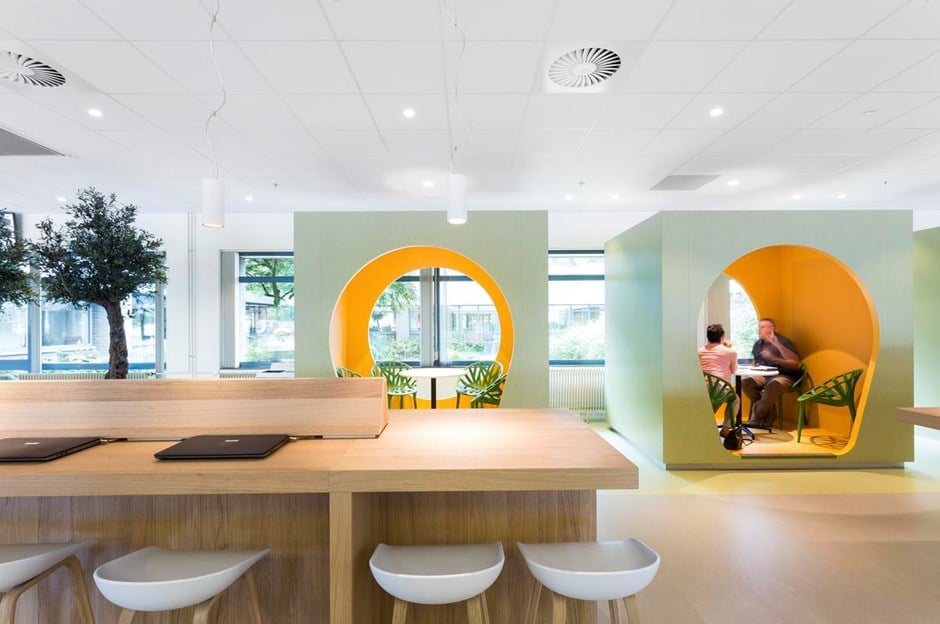
Some designers favor exposed ceilings for an industrial or loft aesthetic. Here is the honest comparison.
Exposed ceilings can increase energy expenses. Although exposed ceilings have a lower material cost, they are less effective as a barrier against heat transfer. This leads to increased summer heat gain and winter heat loss, driving up HVAC costs. Demanding maintenance: Exposed ceilings require frequent cleaning and repainting, which is not necessary with suspended ceilings.
For hotels where operational costs compound over years, the suspended ceiling often comes out ahead even when the upfront material cost is higher.
Next Steps for Hotel Developers and Designers
Here is how to approach ceiling specification for a hotel project:
- Map the acoustic zones. Guest rooms, corridors, lobbies, F&B outlets, and conference areas all have different needs. Treat them separately.
- Set performance targets early. Define αw and Rw requirements before selecting products. This prevents last-minute substitutions.
- Confirm integration requirements. Know which HVAC diffusers, light fixtures, and sprinklers need to sit in the ceiling plane before choosing a grid profile.
- Review fire and humidity ratings. Confirm compliance with NBC 2016 and any LEED or Green Building Council requirements for your project.
- Request samples. Acoustic and visual performance both matter. View panels under the lighting conditions of the actual space.
- Plan for future access. Choose grid systems that allow individual tile removal without disrupting adjacent areas.
FAQs: Suspended Ceiling Systems for Hotels
1. What type of suspended ceiling is best for hotel guest rooms?
For guest rooms, mineral fiber panels with a high sound attenuation (Rw) rating work best. They reduce noise transfer between floors and adjacent rooms. Pairing the ceiling with acoustic wall treatment and door seals gives the most complete result. Choose panels rated for humidity resistance if the room has an attached bathroom.
2. How does a suspended ceiling improve a hotel's energy costs?
A suspended ceiling reduces the air volume that HVAC systems need to heat or cool in each space. The plenum above the ceiling also acts as an insulating buffer. Over a full hotel property, this reduction in energy load can make a measurable difference in monthly utility costs, especially in climates with extreme summer heat.
3. Can suspended ceilings accommodate fire sprinklers and HVAC diffusers?
Yes. Suspended ceiling grids are designed to accept fire sprinkler heads, HVAC diffusers, recessed lighting, and other building services. Individual tiles can be cut or replaced to fit around these elements. The ceiling plenum provides the space needed to run all ductwork and pipework without exposing them to the room below.
4. How often do suspended ceiling tiles need to be replaced in a hotel?
Acoustic ceiling systems are designed for long-term performance when properly maintained. In hospitality environments, lifespan depends on factors such as humidity levels, maintenance practices, and operating conditions. If an individual ceiling tile becomes damaged, it can typically be replaced without affecting the surrounding ceiling system, helping reduce maintenance time and costs.
5. What is the difference between sound absorption and sound insulation in ceiling tiles?
Sound absorption (measured by the αw rating) reduces echo and reverberation within a room. Sound insulation (measured by the Rw or Dn,f,w rating) blocks sound from passing through the ceiling to floors above or below. Hotels typically need both. Use high-absorption tiles in lobbies and restaurants to cut internal noise, and high-insulation assemblies in guest rooms and conference areas to block sound transfer.